



America | Tech | Opinion | Culture | Charts

Last Saturday morning, three teenagers stole a handgun from Central Texas Gunworks in Austin. In the next twenty-eight hours, they shot four people and stole five vehicles. The oldest teenager was seventeen.
Sunday afternoon, surveillance footage showed a white Kia sedan approach a victim, then drive off as he fell to the ground. Austin Police sent a BOLO, short for “be on the lookout,” to surrounding agencies, and in another town twelve miles east of Austin, the Manor Police Department located the car thirty-eight minutes later. A Flock Safety camera had picked up the plate as the car drove past, matched it against the BOLO, and flagged it. Two suspects were caught within the hour, and a search with nearly two hundred officers, helicopters, and K-9 units continued into the night before the third was found.
Austin had used Flock cameras since 2023, but ended the contract in June of 2025 over privacy concerns raised by local advocacy groups. At a press conference on Sunday announcing the arrests of the three teenagers, Austin Police Chief Lisa Davis was asked whether license plate reader technology like Flock cameras could have helped.
“Yes,” Davis said. “It could have helped.”
The $1,000 Prototype
Garrett Langley was an electrical engineer who’d already sold two companies: a car subscription service called Clutch and Experience, a live events platform acquired by Cox for $200 million. Neither company, in his uncle’s blunt assessment, really mattered. “Go build something that’s not so dopey,” his uncle told him.
He was living in Atlanta when a group of kids jumped out of a car one night in 2017 and started pulling door handles on parked trucks. This is a common form of organized crime in the southeast. Pull ten F-150 door handles and about three will be unlocked. One in ten of those trucks will have a firearm in the glove box. That night, one of those kids found a firearm, and the truck’s owner posted on Nextdoor: “Oh my gosh, I forgot my gun in my car, and it’s now gone.” The Atlanta Police Department responded, but there wasn’t much they could do.
Langley didn’t know much about law enforcement, so he started asking Atlanta-area police chiefs and HOA boards why more of these crimes weren’t being solved. The bottleneck was evidence, the police chiefs told him, and specifically license plates. Maybe this was his chance to build something that mattered.
He had stumbled onto a national problem. In the United States, more than half of murders go unsolved. For robberies, the figure is nearly 70%. For motor vehicle theft, 86%. These numbers actually overstate how well the system works, because the majority of crimes are never formally reported to the police in the first place. According to the Bureau of Justice Statistics, only 26.8% of household thefts even generate a police report.
Roughly 70% of US crimes involve a vehicle, so a clear license plate or vehicle signature is the fastest way to create an actionable lead. Automated License Plate Recognition (ALPR) systems had been around for years, but a single deployment ran about $50,000 due to construction costs (trenching for power and fiber, permits) and specialized hardware (infrared cameras). Rich cities could afford a handful at strategic chokepoints, but these systems were out of reach for everyone else. Safety, in other words, was a privilege.
Langley wondered if modern computer vision, running on cheap mobile processors, could do the same job. And if you powered the system with a solar panel, you didn’t need to trench for power or fiber at all.
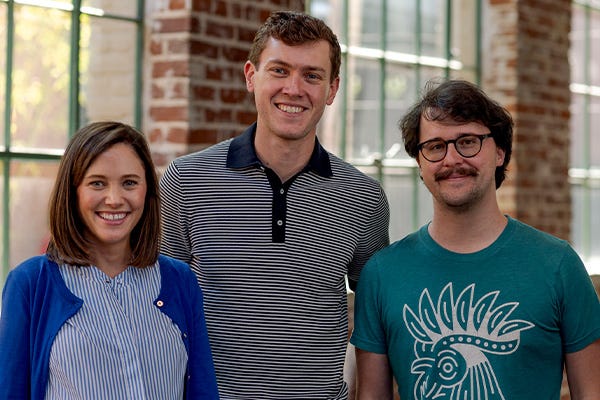
Matt Feury was an engineer who had worked at Langley’s previous company, Experience. Together they spent a weekend building a prototype from an Android phone, a solar panel, and a battery they purchased for a combined price tag of less than $1,000.
The smartphone supply chain had made high-end image sensors cheap. The camera in a one- or two-year-old phone outperformed most standalone sensors and cost around $50. Computer vision had also reached a threshold where a competent engineering team could build a production-grade license plate recognition model without machine learning PhDs. And the whole thing could run on solar power with LTE connectivity, which meant no trenching, fiber, or electrical hookup. With some creativity, a box of parts from Best Buy could now beat the $50,000 incumbent technology.
The prototype looked, by Langley’s own admission, “like garbage,” but they put it up in their neighborhood anyway. Two months later, there was another break-in, but this time, they had an actionable lead. They could see every car that passed through the neighborhood that night. A few hours later, the police made an arrest.
The five o’clock news wanted the story, and the next morning, Langley had five emails from other neighborhoods. He, Feury, and their third co-founder Paige Todd incorporated Flock Safety later that year. Nine years later, the company operates across 49 states and is valued at more than $8 billion.
The Growth Engine
Flock’s first customers were HOAs, which turned out to be the perfect beachhead market. Boards met every month, controlled discretionary dues, and could approve a $2,000-3,000 annual camera subscription without a lengthy procurement process.
Josh Thomas, Flock’s VP of Marketing at the time, soon figured out a more scalable way to acquire these customers. Local news stations were starving for content, and a story about new crime-fighting technology with a privacy angle was editorial gold. Every time Flock sold a camera, they would pitch the story to local media. “Flock Safety Installs New Technology to Help Solve Crime, But What’s the Risk to Privacy?” was the headline Josh wrote in his pitch. The local affiliate would send out a crew to interview local community members and show the product. The story would air, and website traffic would spike.
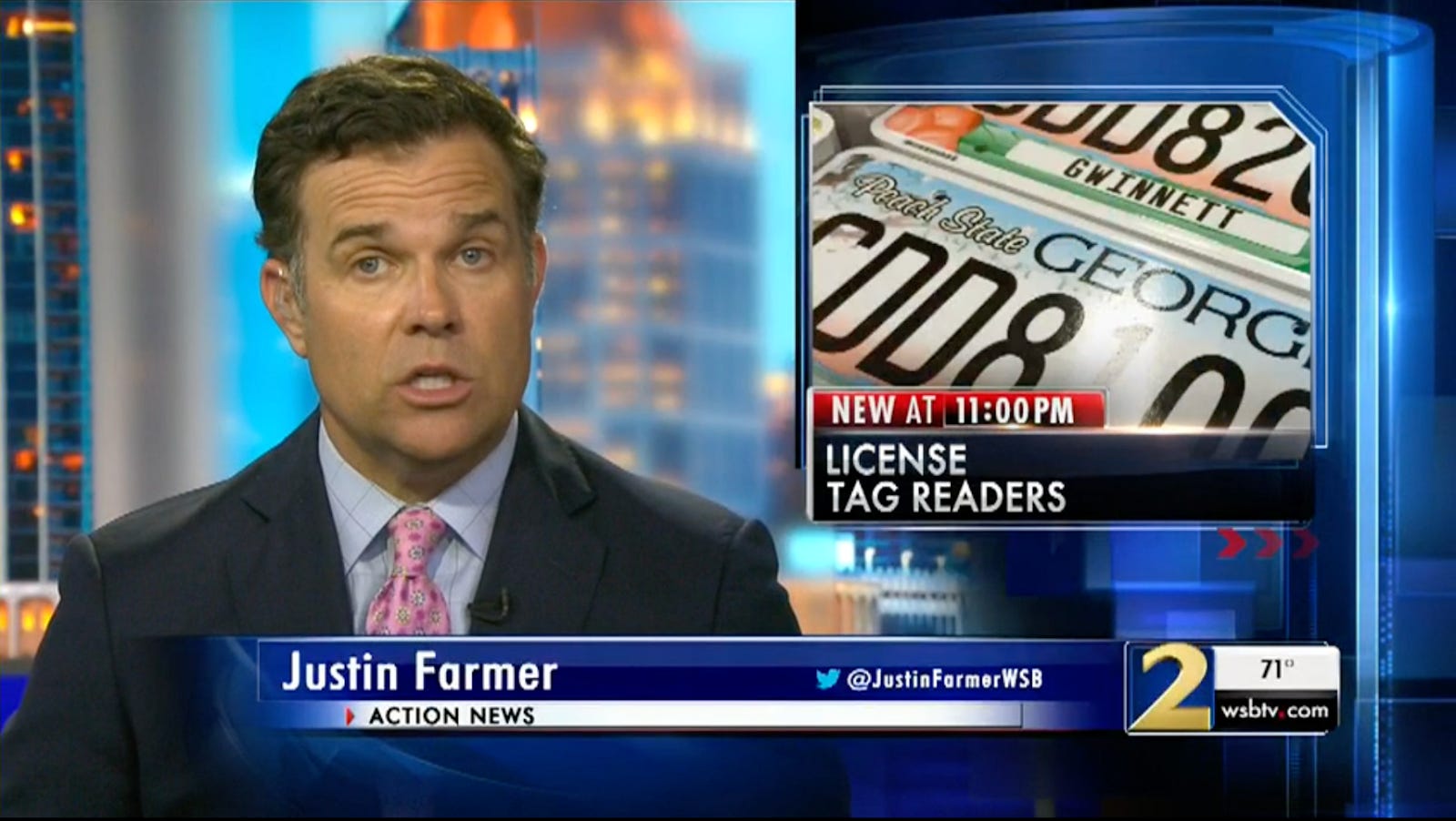
“That’s basically how we grew for the first few years,” Josh told us. “Only PR and word-of-mouth.”
Law enforcement was mostly an afterthought for the first two years. Agencies would make arrests with evidence from neighborhood cameras, then call Flock asking to buy directly. The demand was there, but when Flock tried to turn it into a repeatable sales motion, the standard SaaS playbook of sales development representatives, account executives, and cold outbound produced almost nothing. For twelve months, the pipeline with law enforcement was essentially zero. The breakthrough came when Langley started flying to Los Angeles every week and doing door-to-door, relationship-based sales. When he could reliably fly to a city and come back with a signed deal, he brought on a Chief Revenue Officer who scaled the playbook across a hundred reps.
Flock’s vehicle search was already more useful for investigations than the legacy systems. The old ALPR technology relied on infrared reflection off a plate’s reflective coating, but Flock’s computer vision captured much more: make, model, color, the presence of roof racks, and bumper stickers. The company calls the twenty-four distinct characteristics it captures a “vehicle signature.” When Flock ran side-by-side comparisons with the $50,000 incumbents, customers were confused. “Something must be wrong with your camera. You’re seeing more cars,” they said. Flock was capturing 30-40% more vehicles, because it picked up all the cars with plastic license plate covers, temporary tags, or no plates at all. Before Flock, a criminal could beat the old systems by removing their plate. With Flock, that car still exists in the system as a white Ford F-150 with a roof rack.



As Flock signed more police departments, they kept hearing the same request. Cops maintained hot lists of stolen cars, wanted vehicles, and missing persons, and they wanted to know the moment one passed a camera.
When Flock built the real-time alerts system, crime dropped 40-60% in Flock’s first major county deployment. Almost all of it was driven by alerts on repeat offenders who were already known to law enforcement. The cops just needed to know when those vehicles were moving through their jurisdiction. Six months later, Flock’s VP of Strategy Bailey Quintrell was invited to a meeting he hadn’t organized. A large agency convened every law enforcement entity in their million-person county and put a map on the wall showing where Flock cameras were deployed and where they needed more. Because Flock allowed agencies to share camera access with each other, every new department that joined made the network more useful, which created an incentive for word-of-mouth growth.
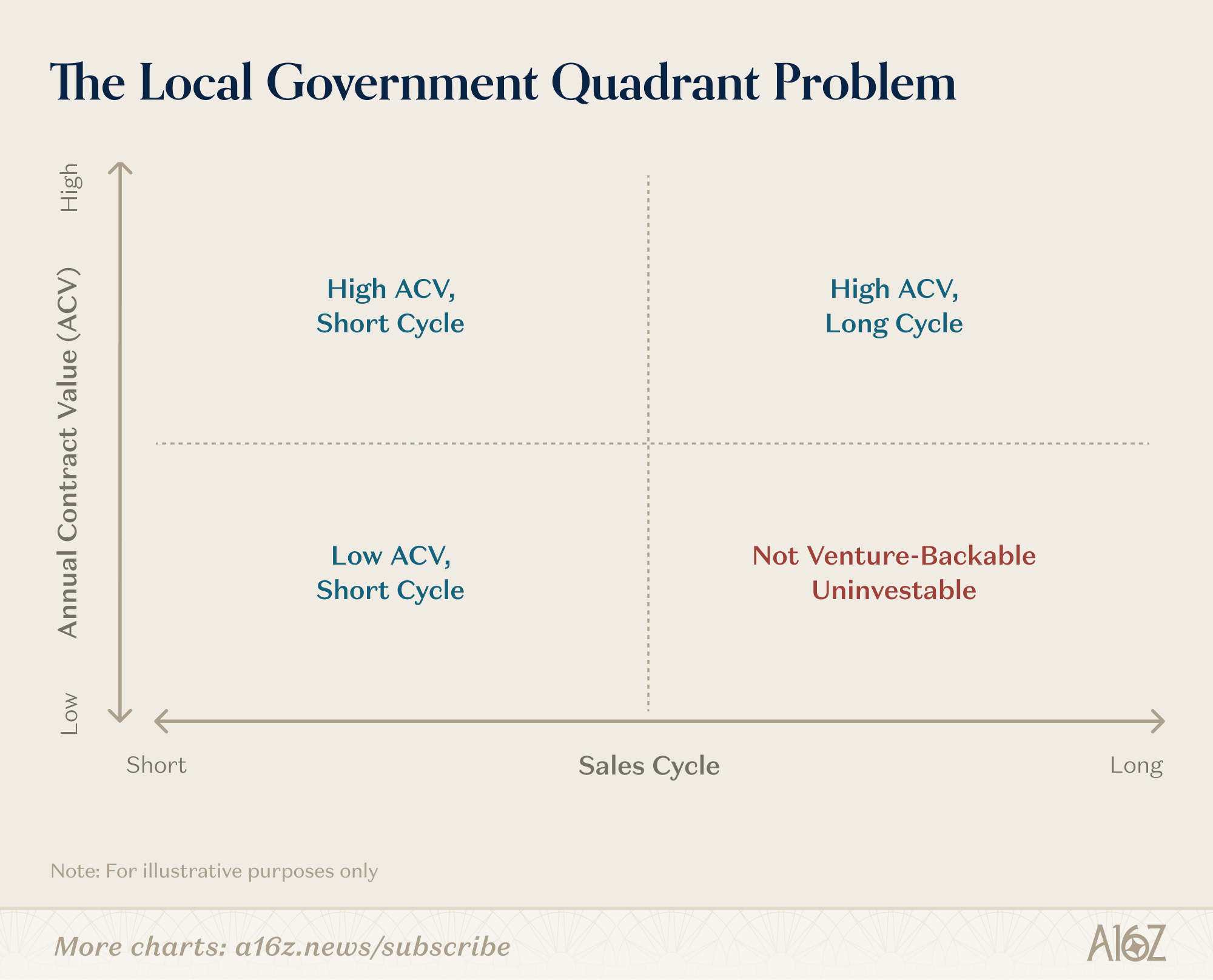
Despite this traction, raising venture capital was a struggle. Every investor saw the same thing: the biggest departments bought 10 to 20 cameras each, small departments couldn’t afford any, and the TAM was maybe in the low $100 millions. Langley frames the skepticism as a “quadrant problem” – plot sales cycle against annual contract value, and local governments sit in the quadrant venture capital won’t touch. Long sales cycles, low annual contract values, city council approvals, procurement bureaucracy. Every company in the space before Flock had been bootstrapped, and it took them decades to reach meaningful size. But what Flock was seeing looked nothing like this. The smallest agencies in the country were buying 50, 75, 100 cameras. The market wasn’t small. The problem was that nobody had built something good enough and cheap enough to find out how much demand actually existed.
The Market Everyone Missed
The deeper Flock got into the market, the clearer it became why nobody had tried. The infrastructure was stunningly fractured and old.
America has 18,000 municipal police departments. The United Kingdom has forty-five, Australia has eight, and France has two. The US model gives you hyper-local accountability, where you might know the officer who patrols your neighborhood, but it also means criminals cross city lines with impunity while agencies share information via PDF attachments and, until recently in some states, filing cabinets. The FBI’s national stolen vehicle database updates once a day via what Langley describes as “a CSV file that gets sent around on FTP servers.” If your car is stolen in South San Francisco, it takes twenty-four hours for the national database to catch up. As recently as 2022, it was illegal for law enforcement agencies in Florida to host data in the cloud. A top-100 American city was running entirely on paper records two years ago.
Flock’s cloud-based platform cut through much of this. Where legacy systems ran on local servers and CSV exports, Flock’s architecture lets any department share data with a neighboring department through opt-in agreements, instantly and on terms each agency sets. When San Francisco adopted Flock, Oakland’s crime went up as criminals shifted across the city line. Then Oakland adopted Flock too. Once both departments agreed to share data, a stolen car that crossed the border didn’t vanish anymore.
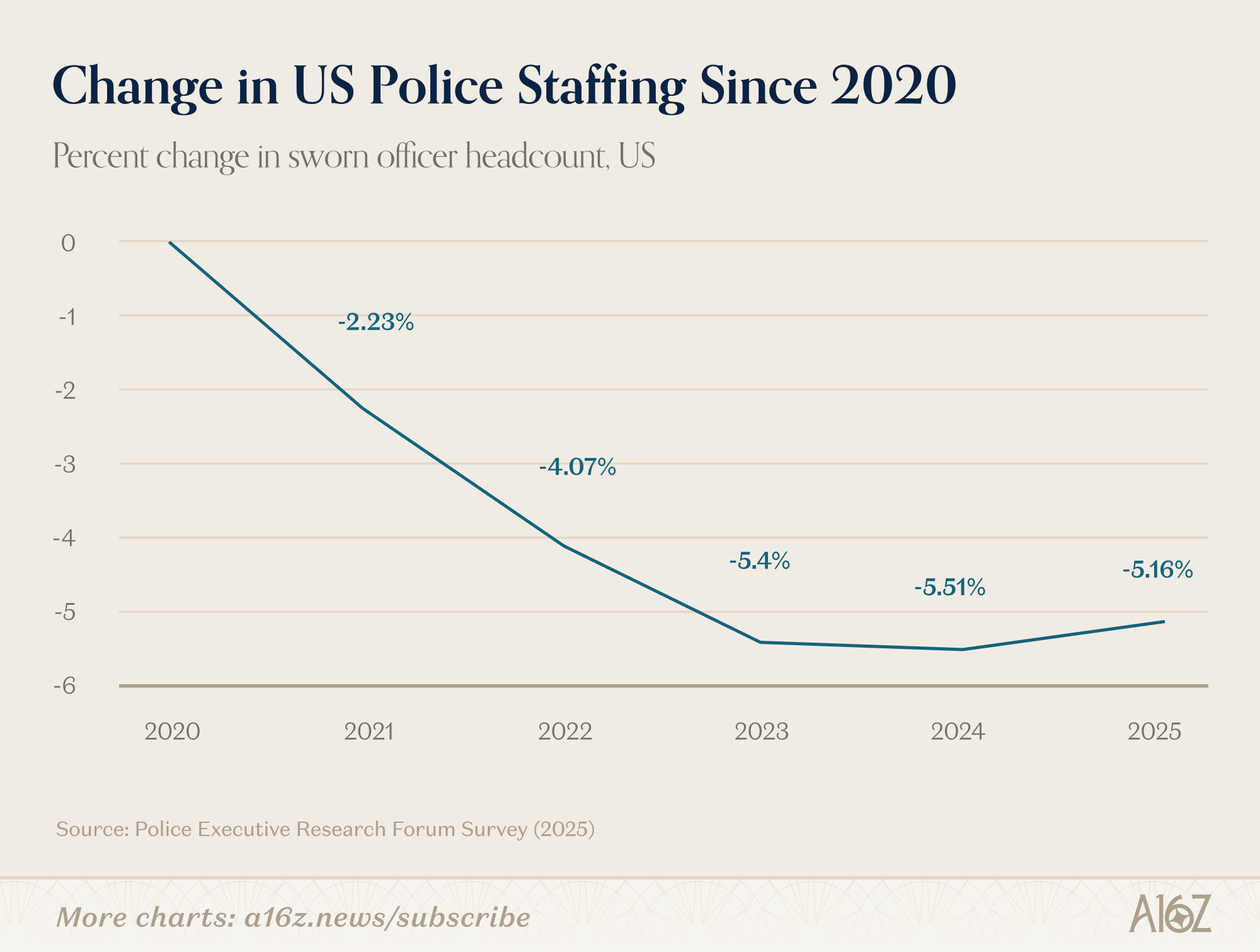
Then there’s the police staffing crisis. Early retirements surged in 2020 and never recovered. Many replacements are in their early twenties and haven’t actually solved homicides. One city Langley visited will buy you a house if you agree to be a cop.
For departments running at 40% staffing, Flock fills the gap. An investigator who used to spend hours navigating dozens of browser tabs and filing cabinets to build a case now gets much of that work pre-assembled. Flock calls this “amplified intelligence.” AI handles the data aggregation and pattern matching, but a human decides whether to pull someone over, and a judge still issues the warrant.
What Cameras Can Do
A 911 call in a major American city reported an attempted homicide. The only detail the caller provided was that the suspect was wearing white Converse sneakers. A crime center operator used FreeForm, Flock’s natural-language search tool, to query the camera network and identify the individual on a nearby feed. The operator pushed the video to the nearest officer, and the suspect was arrested. All of this took seventeen minutes.
In a town in Colorado, an armed robbery at a Levi’s outlet triggered a drone launch that tracked the fleeing suspect from 400 feet. The suspect, oblivious to the fact that he was being tracked, drove home, and as soon as he pulled into his driveway, was arrested by two officers. In Elk Grove, California, drones reach a 911 call in sixty-eight seconds, compared to the department’s previous seven-and-a-half minute average. For vehicular pursuits – one of the most dangerous things police can do – departments are sending drones instead.

Flock now serves over 12,000 customers across law enforcement and private industry. The original solar-powered license plate camera has been joined by situational awareness cameras, gunshot and crash detectors, HD video with pan-tilt-zoom, and American-designed drones produced at a 97,000-square-foot factory near Atlanta. FlockOS ties everything together as a real-time intelligence platform that integrates Flock’s own devices, third-party cameras, dispatch alerts, body-worn cameras, and traffic data.
Corporate customers compound the network. Hotels, bars, HOAs, and retailers install cameras for their own security, and when a crime happens nearby, they can share feeds with local police, becoming force multipliers the department doesn’t pay for. The customer decides whether to share, and on what terms. Some grant 24- or 48-hour access for a specific incident and then revoke it; some share nothing at all. Every camera that goes up is the customer’s, but when customers choose to share, even more crimes can be solved.
The Evidence
San Francisco is one of the clearest examples of what happens when a city commits to the full safety bundle: prosecution, modern technology, and political will. In 2024, the city deployed 400 license plate readers and 80 drones across the city. Major crimes fell 44% from 2023 to 2025, and car thefts dropped 54%. Evan Sernoffsky, a spokesperson for the SFPD, credited “tools like drones, ALPR, and public safety cameras.” The decline shows up across nearly every crime category:
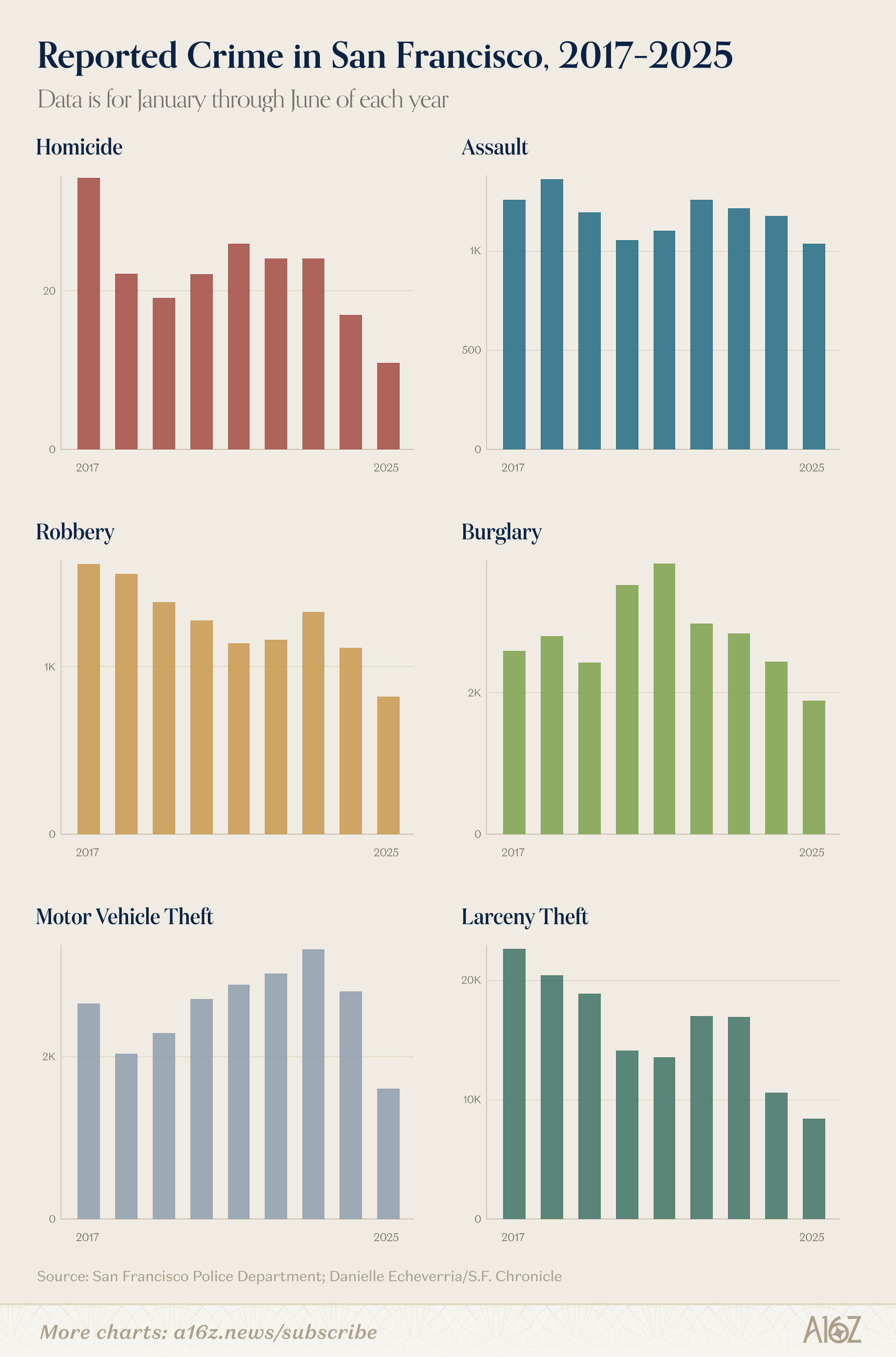
Flock supported over 1 million criminal cases in America last year. In some cases, Flock provides the initial lead. In others, it’s the entire evidence chain outside of the officer physically making the arrest. Flock now serves over 6,000 communities, well north of 50% of the American population by coverage, helps resolve roughly 20% of all reported crime in the regions it’s active, and returned over 10,000 missing people last year – roughly one every hour.
The greatest deterrent to crime isn’t the severity of punishment but whether you think you’ll get caught. “Certain punishment means no punishment,” goes an old Chinese proverb. Raise the probability of getting caught, and the system punishes fewer people, not more. A study of Denmark’s DNA database expansion found that simply increasing offenders’ probability of being identified reduced recidivism by 43% in the first year, with effects persisting for at least three years. In 2022, a Southern California rap song warned listeners to stay away from Flock cameras. More recently, a well-known criminal in the Bay Area announced on a podcast that he was getting out of the crime game because license plate readers, cameras, and drones made it too hard not to get caught. He was going to get a job instead.
Las Vegas tested how much could be achieved with how little. A public-private partnership with Flock added less than one percent to the police budget, and police shootings of suspects dropped sharply. Vegas now has the highest murder clearance rate in the country at well over 90%.
The Cost of Cancellation
Since the start of 2025, at least 30 American cities have either canceled their Flock contracts or deactivated their cameras. The strongest version of the opposition’s argument isn’t about any single camera. It’s about what a network of cameras can become when each jurisdiction sets its own access rules. Surveillance infrastructure built for one purpose can be repurposed for another. And the controls Flock has built into the system – auditable searches, thirty-day default retention, per-jurisdiction access – only work if they’re enforced.
Some of the strongest answers to those concerns have come from outside the company. In January 2026, a federal judge in Norfolk, Virginia ruled that the city’s Flock camera network did not violate the Fourth Amendment. Judge Mark Davis found that the cameras captured “discrete pictures at different locations” rather than the kind of continuous tracking the Supreme Court has flagged as constitutionally problematic. The ruling joins more than thirty state and federal decisions that have upheld fixed-location ALPR systems.
But Langley doesn’t dispute the broader concern. Every powerful technology has been misused. Airplanes have been used for terrorism. Cars kill 40,000 Americans a year. The smartphone in your pocket streams continuous location data to dozens of apps and data brokers without a second thought – what you search, who you message, where you sleep – stored indefinitely and sold to advertisers. His argument isn’t that Flock can’t be misused. It’s that the answer to a powerful technology that can be misused isn’t to ban it but to build mechanisms that catch misuse and hold the misusers accountable. “Every search on our system is logged with the officer’s name, the reason, and a timestamp,” Langley says. “Every jurisdiction’s policy is public. Misuse leaves a trail by design, and that’s how every documented case of misuse has been found.” Last month, for example, a routine audit of Richmond Police Department’s Flock usage caught a sergeant who had shared a vehicle image with an FBI agent investigating a homicide outside Virginia, which was a violation of state law. The sergeant’s access was revoked, and the department disclosed the violation publicly.
Beyond accountability mechanisms, Flock pushes policing in a direction that should satisfy civil liberties advocates rather than alarm them. Oakland adopted the system specifically because they wanted to stop officers from driving around looking for suspicious people. Historical policing was deeply prejudiced: you went to dangerous neighborhoods, looked for suspicious people, and arrested them. That approach perpetuated cycles against specific communities. A system that flags stolen vehicles instead of suspicious people is, in his view, a step forward for civil rights, not backward.
The consequences of removing cameras are harder to debate. In 2021, Denver had 96 homicides. The police department mapped the specific blocks driving most of the violence and concentrated resources there: more officers, better lighting, license plate readers. By 2025, homicides had fallen to 37, the lowest in over a decade, and the largest drop of any major American city. Yet, on March 31, 2026, all 110 license plate readers were decommissioned after the city council declined to extend Flock’s contract over concerns that data could reach federal immigration authorities. Now the numbers have started moving the other way. “In the last probably 10 days, we’ve had six homicides, I believe,” Police Chief Ron Thomas said in an interview 21 days later. “We’re 50% above where we were this same time last year.” He stopped short of blaming the cameras’ removal directly, but acknowledged that going “blind for some period of time” without Flock had “hampered our investigative efforts.”
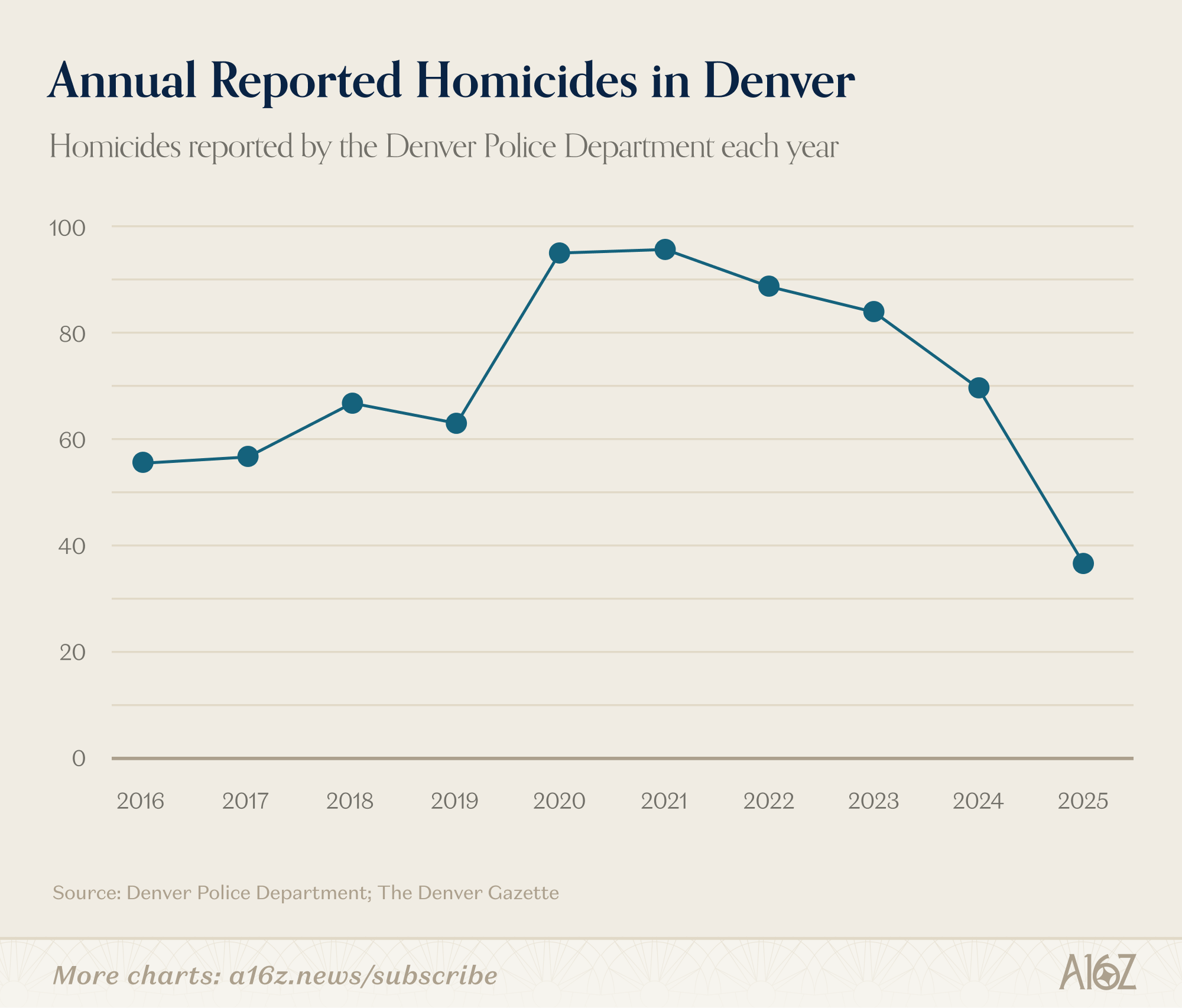
When cities remove their cameras, they are choosing fewer crimes solved, fewer missing persons found, and fewer cases cleared. The people who pay the price for that aren’t the activists who organized the removal but the residents whose stolen cars don’t come back, whose break-ins don’t get solved, whose missing children don’t get found. The political leaders who made that decision should be held accountable for those outcomes.
The Long Game
“If I woke up in ten years and all we had done was put a lot of people in prison,” Langley says, “we’d have failed.” A million arrests means a million victims. It also means a million people entering a system with a 70% recidivism rate that will likely make them more dangerous than when they went in.
The majority of crime Flock solves is nonviolent, and even a juvenile convicted of a nonviolent offense can end up in the penitentiary system, where data shows they are more likely to go from nonviolent to violent within months and never escape the cycle. Langley is exploring whether Flock can help build a system that gives nonviolent offenders a path back without increasing their likelihood of reoffending.
Flock launched the Thriving Cities Fund in 2024, investing $10 million in restaurants, nail salons, and other businesses in cities where Flock is deployed – the kinds of businesses where a sixteen-year-old can get a job instead of pulling truck door handles. In Las Vegas, a program called Hope for Prisoners pairs people coming out of prison with mentors and job placement, and a UNLV study found participants reoffend at a fraction of the national rate. The Vegas prosecutor’s office now sends some first-time non-violent offenders straight there instead of prosecuting them. In Atlanta, four @Promise Centers run by the Atlanta Police Foundation reach kids earlier, before the first arrest, offering workforce training, mentoring, therapy, and GED support. Langley wants Flock to help more cities do the same.
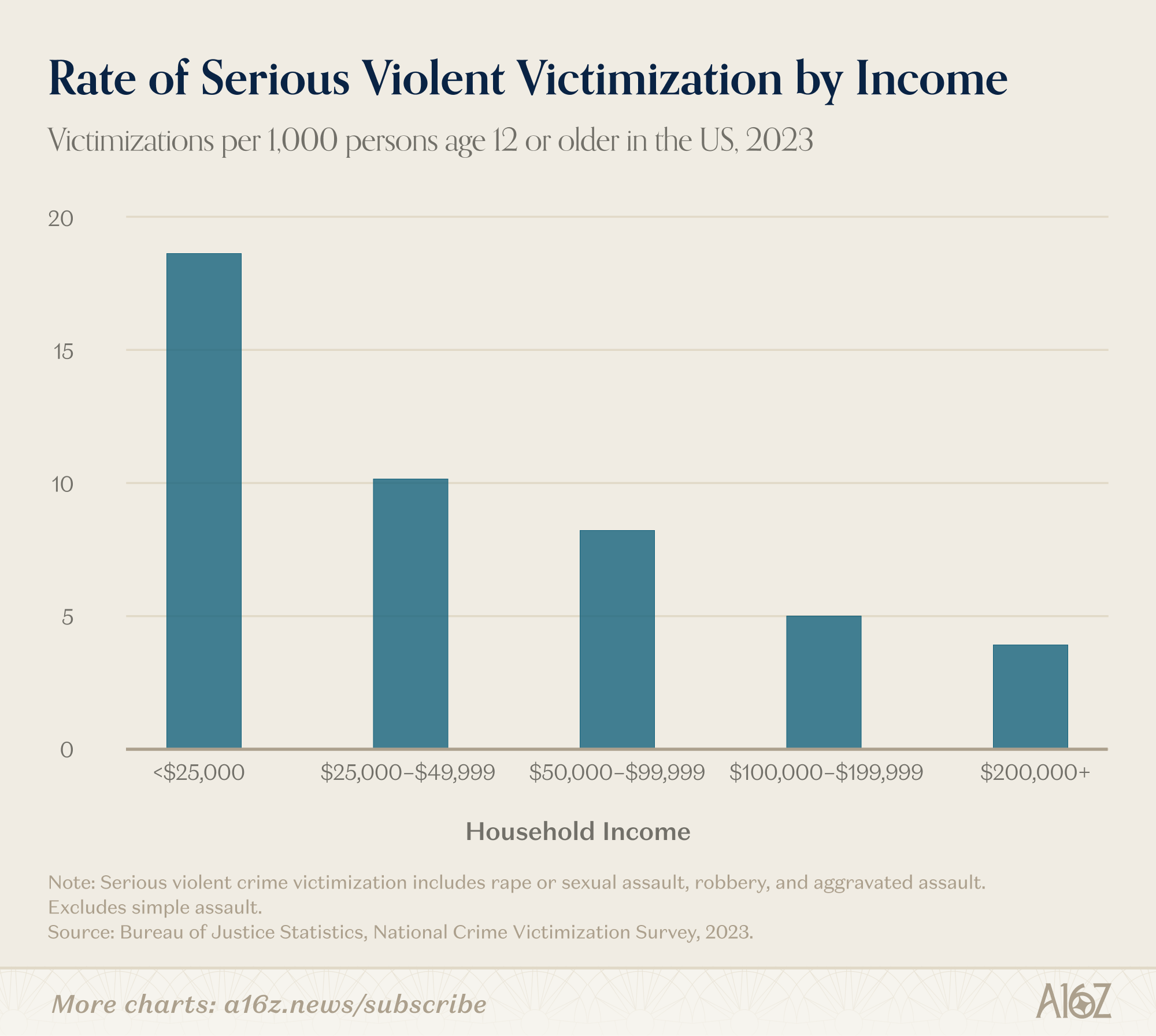
If you’re affluent, you can hire private security or move to a safer neighborhood. If you’re not, crime is simply the cost of being alive. That’s the gap Langley has been trying to close from the beginning.
In 2018, The Outline wrote a profile on Flock titled Snitching-ass startup raises $10 million to privatize the surveillance state. “I framed it,” Langley said. “It’s a reminder that when you work on important things, some people will disagree, and that’s okay. It means you should work harder.”
His uncle told him to go build something that wasn’t so dopey. Nine years later, his business has helped solve over a million criminal cases and brought home more than ten thousand missing people. The founder of the largest public safety network in the country is spending his time thinking about how to keep people out of prison, and how to make sure the next neighborhood that needs a camera doesn’t have to be rich to get one.
It’s hard to call any of that dopey.



This newsletter is provided for informational purposes only, and should not be relied upon as legal, business, investment, or tax advice. Furthermore, this content is not investment advice, nor is it intended for use by any investors or prospective investors in any a16z funds. This newsletter may link to other websites or contain other information obtained from third-party sources - a16z has not independently verified nor makes any representations about the current or enduring accuracy of such information. If this content includes third-party advertisements, a16z has not reviewed such advertisements and does not endorse any advertising content or related companies contained therein. Any investments or portfolio companies mentioned, referred to, or described are not representative of all investments in vehicles managed by a16z; visit https://a16z.com/investment-list/ for a full list of investments. Other important information can be found at a16z.com/disclosures. You’re receiving this newsletter since you opted in earlier; if you would like to opt out of future newsletters you may unsubscribe immediately.
Interesting ... It's both a great public benefit as well as a cautionary tale. Methinks the tension between surveillance and privacy is fundamentally a high-stakes cost-benefit analysis. On one side of the scale sits our collective desire for safety, where public monitoring, data tracking, and intelligence gathering serve as vital tools to prevent crime, thwart security threats, and manage emergencies. On the other side sits our fundamental right to autonomy and personal freedom, which quietly erodes when we are constantly watched. The core dilemma isn't about choosing one over the other; it's about determining the exact exchange rate—how many ounces of individual privacy are we willing to trade for a pound of collective security? Because once that transaction is made, history shows it is incredibly difficult to buy that privacy back, leaving society to constantly recalibrate where safety ends and overreach begins.
Here is an actual case of the cost/benefits involved. South Korea is an absolute textbook study of what happens when a society aggressively tips the scales of that cost/benefit analysis in favor of safety and public order. Outside of China, Seoul routinely ranks as one of the most heavily surveilled cities on earth, with a staggering density of closed-circuit television (CCTV) cameras. But what makes South Korea’s model truly unique isn't just the government's infrastructure—it’s how they have completely outsourced surveillance to the public through cash incentives, creating an army of amateur bounty hunters known locally as "paparazzi" (bparazzi).
Under various government programs, citizens can use their smartphones or hidden cameras to film petty offenses—such as illegal trash dumping, traffic violations, corporate safety breaches, tax evasion, or corrupt officials accepting expensive gifts—and submit them to the government for cash rewards. The system became so lucrative that it birthed private academies where citizens pay tuition to learn how to use hidden cameras, stalk targets, and efficiently milk government bounties for full-time income. Over time, the government has actually had to scale back or cancel certain reward programs because professional bounty hunters were paralyzing local agencies with millions of minor reports just to chase cash.
South Koreans have traded away a significant chunk of baseline privacy and organic social anonymity. In exchange, they have bought one of the safest, most efficient, and orderly societies on the planet. It works exceptionally well for them, but it serves as a stark reminder that maximum safety requires citizens to accept living their lives entirely in the open.
So what poses a greater long-term risk to a society: a culture with higher crime but intact privacy, or a virtually crime-free culture where everything is under surveillance and everyone is a potential informant?
When balancing these two societal models, the greater long-term risk lies in the virtually crime-free culture of total surveillance, because it permanently destroys the psychological and social conditions necessary for human flourishing. While crime is a direct and visible harm, its impact is usually localized and can be mitigated through traditional law enforcement and social support systems without altering the fundamental nature of human relationships. In contrast, a society where every citizen is a financially incentivized informant inflicts a universal, invisible harm: it replaces organic trust with a pervasive, low-grade paranoia that poisons community life. Once mutual trust is commodified and individuals internalize the constant threat of being watched and judged by their peers, the capacity for authentic connection, personal growth, and independent thought is stifled. Ultimately, it is far easier for a resilient society to recover from a higher crime rate than it is to rebuild the baseline social tissue and human freedom once they have been traded away for absolute security.
The bottom line: "Knowledge becomes evil if the aim be not virtuous." Plato