



America | Tech | Opinion | Culture | Charts

Yesterday, four astronauts ventured farther from Earth than any humans have gone before. Their extraterrestrial home is Orion, a 330-cubic-foot capsule, which, for the last six days, has provided them with water, food, air, and a fair bit of luxury: the astronauts have iPhones, exercise equipment, five kinds of hot sauce, and a view of the cosmos never before seen by human eyes. That’s plenty of entertainment for a ten-day mission.
But imagine if Artemis II was instead designed as a 1000-day mission to Mars and back. Making the trip a few years long instead of a few days might make the capsule seem a little less hospitable — the crew would go crazy in such a small capsule, certainly. But not before they ran out of supplies.
The Orion capsule has 90 person-days of oxygen and 60 person-days of water on board, at roughly five kilograms of essentials per astronaut per day. While an electrolysis machine, which generates oxygen, and a water recycling system might make supplying a few essentials easier for a long mission, no similar hardware exists for food production. That means our astronauts would need resupply missions and, as follows, complex planning, procurement, shipping, docking, and other logistics to execute them.
Any attempt to describe the difficulty upgrade of a 1000-day mission will both be a caricature and a vast understatement. It is hard to build a long-duration, self-sufficient habitat for humans.
And yet, humans seem drawn to extreme environments that require extreme logistics — whether for profit, for geopolitical advantage, or simply for the love of adventure.
It was once nearly impossible for humans to live more than a few miles from fertile river deltas; today, one billion human beings live in deserts. Until a few thousand years ago, it was difficult for humans to cross the oceans; today, we have nuclear-powered submarines that can spend months below the surface and nuclear-powered aircraft carriers that can spend months on the water. Humans have established a base camp tens of thousands of feet high on Mount Everest, live peaceful lives on remote islands in the Pacific Ocean, and run annual ultramarathons in Death Valley for sport.
But of all the harsh environments on Earth, one stands above the rest: Amundsen-Scott South Pole Station in Antarctica.
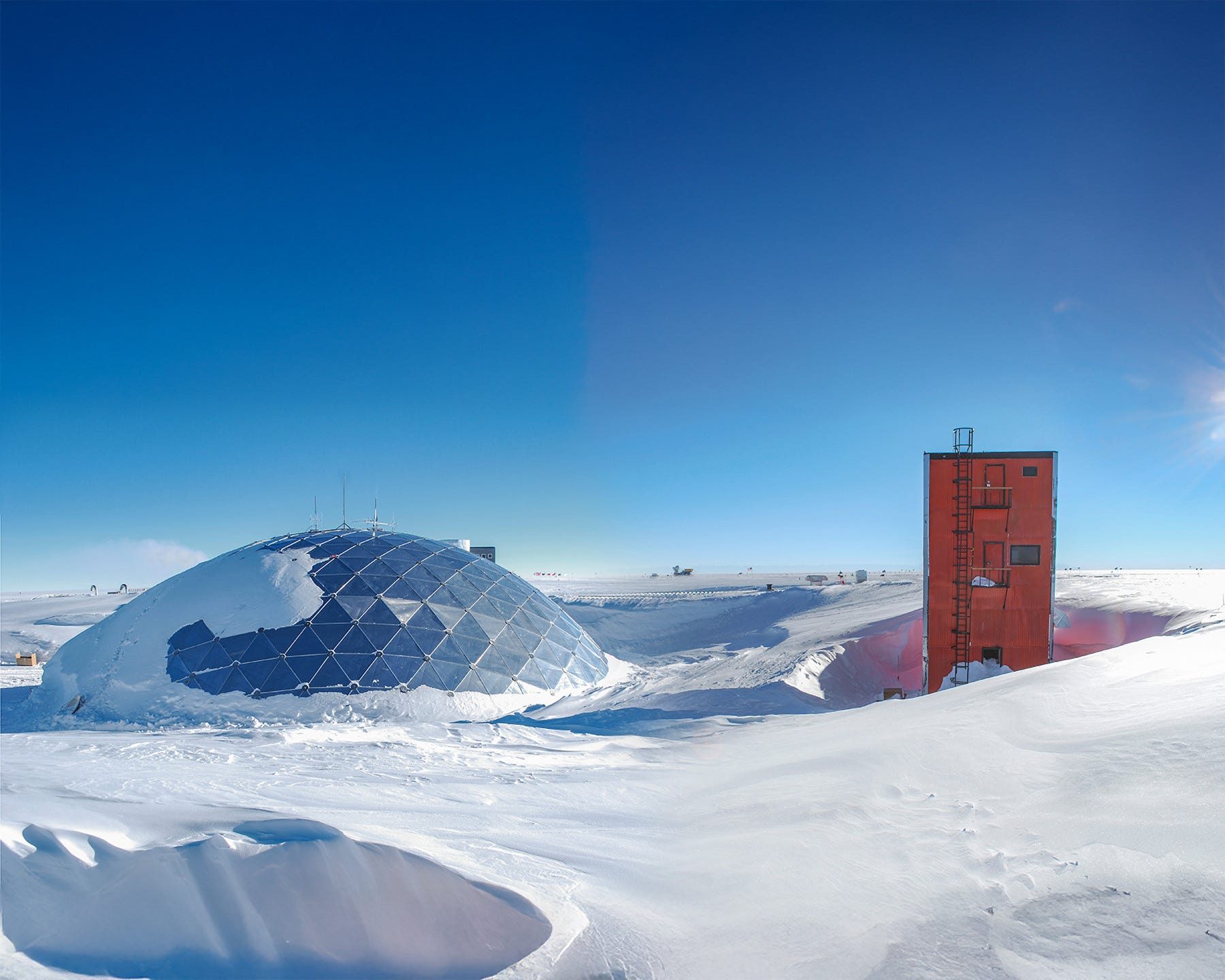
Amundsen-Scott is the most isolated permanently-inhabited structure that humanity has ever built, debatably even including the International Space Station. While the ISS orbits just 250 miles from the Earth’s surface; Amundsen-Scott is more than 2,400 miles from the nearest city, Puerto Williams in Chile. The ISS makes physical contact with the outside world about once every two months during resupply missions; Amundsen-Scott is completely isolated during the eight-month-long Antarctic winters. Even the internet connection is better on the ISS than at the South Pole.
The comparison, of course, isn’t quite fair. Humanity has spent about $150 billion dollars to build the ISS, and only $150 million dollars to build Amundsen-Scott. (It is cheaper to travel by boat than by rocket after all.) But as humanity continues to venture out into space, it’s hard to think of a better terrestrial analogue to life in orbit than life at the South Pole.
The missions of the two Stations are even similar. The ISS is staffed by astronaut scientists and the primary raison d’etre of South Pole missions is also scientific: being thousands of miles from the rest of humanity results in dark, clean, skies. The South Pole is also quiet, being isolated both from the sounds and the radiofrequency traffic that engulfs the rest of the modern world, which makes it an ideal environment.



Given this similarity — and the fact that the Stations are both staffed by human beings for long-duration missions — the goals of both the ISS and Amundsen-Scott are similar: supply your explorers with power, food, water, supplies, and sanity, and do so without relying on continuous access to the elaborate survival infrastructure that the rest of the modern world takes for granted.
As you will soon see, this is an immense challenge. Here’s how we conquered it in Antarctica, and what it means for the next generation of human exploration.
Logistics and Cargo
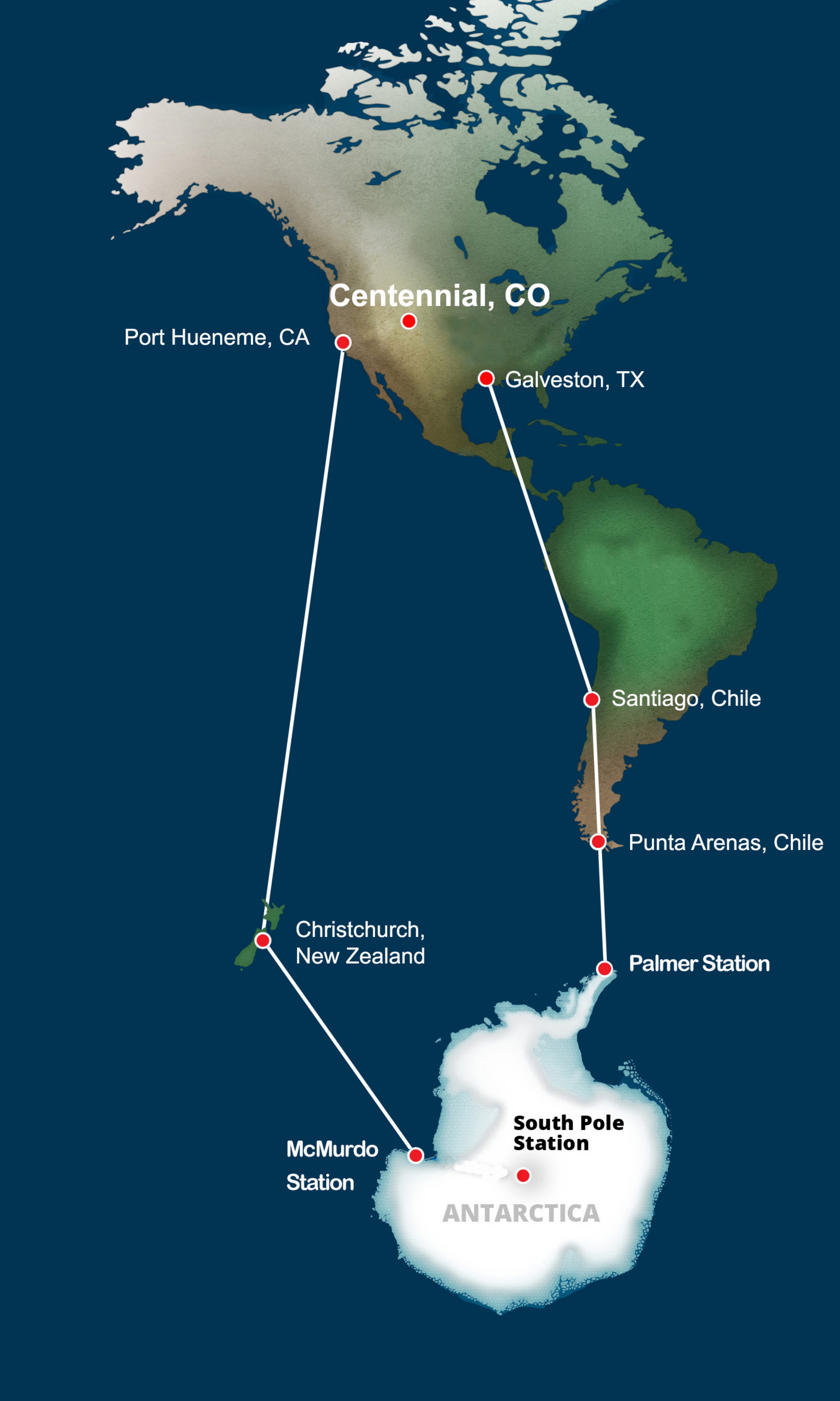
Each year, the entire US Antarctic Program is supplied by a single cargo ship and a single fuel tanker. The two ships land at McMurdo Research Station in early February, the only port on Antarctica and therefore the most southerly ocean port on Earth. At McMurdo the ships offload 400 to 500 shipping containers full of supplies plus an additional 6,000,000 gallons of fuel.
This easiest step of the resupply mission is still a logistical nightmare: the ships begin in Port Hueneme in southern California, make a months-long journey through open ocean, land in New Zealand, then head straight south on the way to McMurdo until they hit ice. Once an icebreaker clears the way and the ships are brought to shore, the full year’s worth of fuel, food, clothing, medical supplies, various maintenance parts (plumbing, electric, etc.), and liquor must be processed and catalogued, then spread across and stored within the hundreds of US-operated buildings on the continent.
In total, last year’s “Deep Freeze” mission — as the cargo journey is aptly named — moved over 30 million pounds of cargo and 3,700 people to Antarctica, with the help of around 1,100 sailors, soldiers, and other US government personnel.
After the supplies arrive at McMurdo, they must be carted across a frozen continent, and with haste: the four-month-long Antarctic summer runs from November to March, and supply runs during the winter are prohibitively difficult to attempt.
So, during February and March (and the November, December, and January that follow winter), one supply plane must make the round trip from McMurdo to Amundsen-Scott South Pole Station every one to two days.These 100-foot-long planes are operated by the 109th Airlift Wing of the US Air Force, and are custom-made for the Antarctic mission: “LC-130s” are based on a normal Lockheed C-130 Hercules, as used by the rest of the US Air Force for troop and cargo transport, but have skis instead of landing gear. They also come equipped with eight rockets that help the planes take off when the Antarctic air gets too thin and cold.

The planes also use a specially-adapted fuel, AN-8, which has a lower freezing point than the JP-8 jet fuel it’s derived from. This adaptation is absolutely necessary: the freezing point of JP-8 is -52° Fahrenheit; the fuel storage wells in Antarctica can get down to -60°F. The AN-8 fuel freezes at -72°F, making it the only viable option for the Antarctic fleet.
Brilliantly, AN-8 is the same fuel used by the electricity generators at Amundsen-Scott Station. As follows, the LC-130s are overfueled so that they can offload around 2,000 gallons to the Station’s reserves in the middle of the trip.
Even after 80 flights, however, the Station still needs a lot more fuel to make it through the winter, and that fuel is delivered not by plane, but overland on the South Pole Traverse (SPoT).
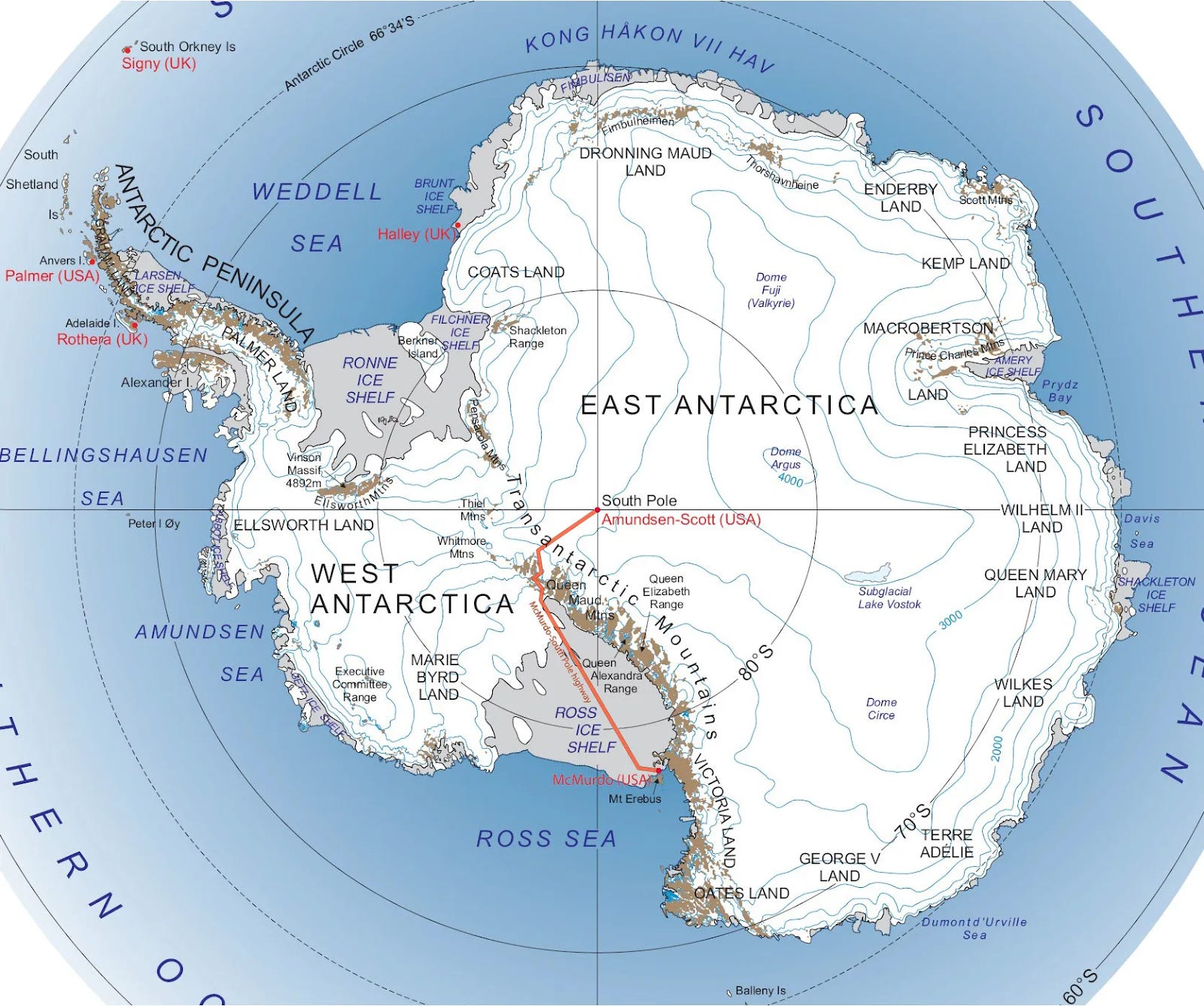
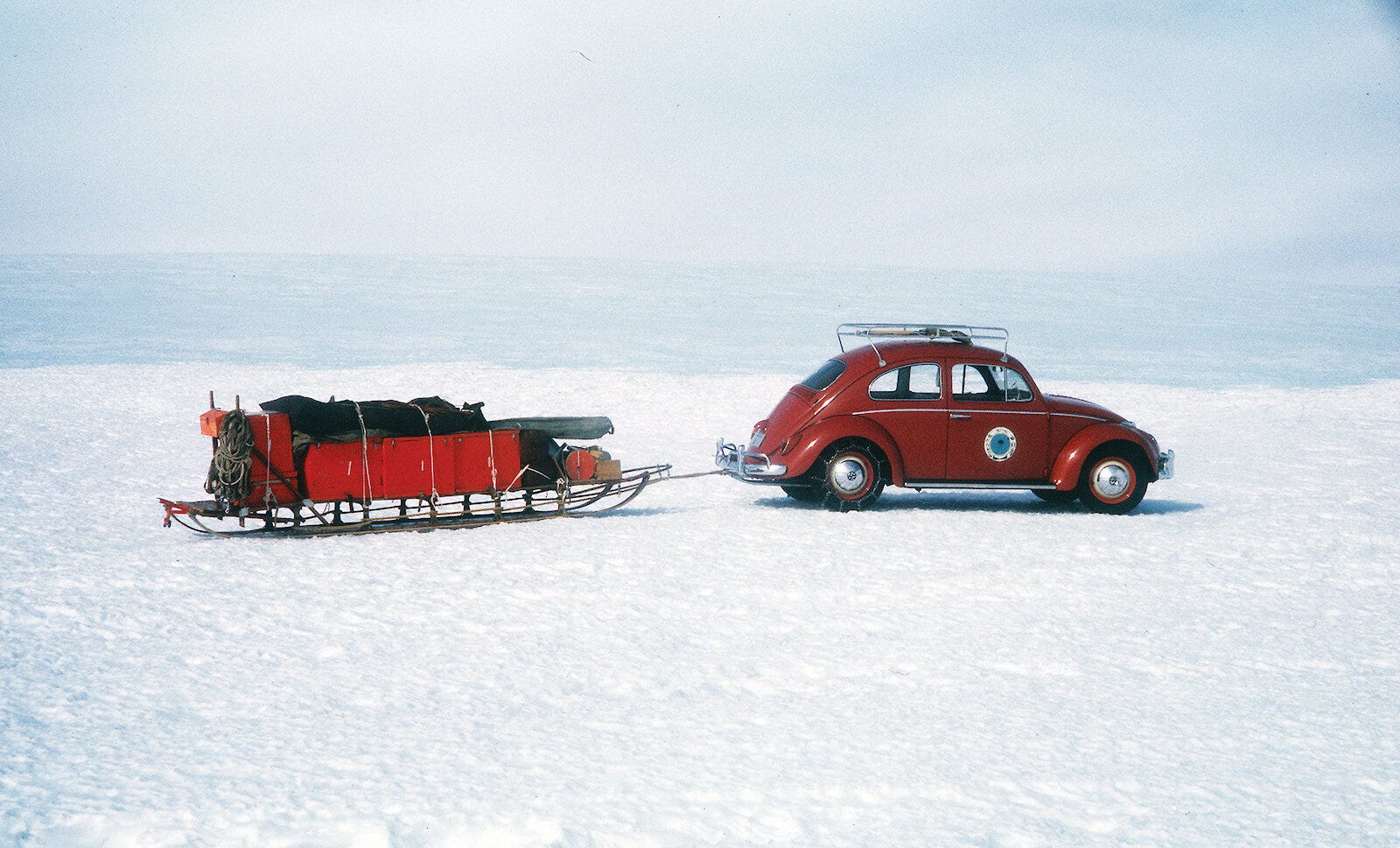
The SPoT is a thrice-annual trip made by a tractor-train that drives over the 1,000-mile “McMurdo-South Pole Highway,” a highway made of the compacted snow, not asphalt. The first car on Antarctica was a Volkswagen Beetle named Antarctica 1; nowadays, the route is run by modified agricultural tractors, including massive Caterpillar tractors that re-compact snow and groom the route with each trip.
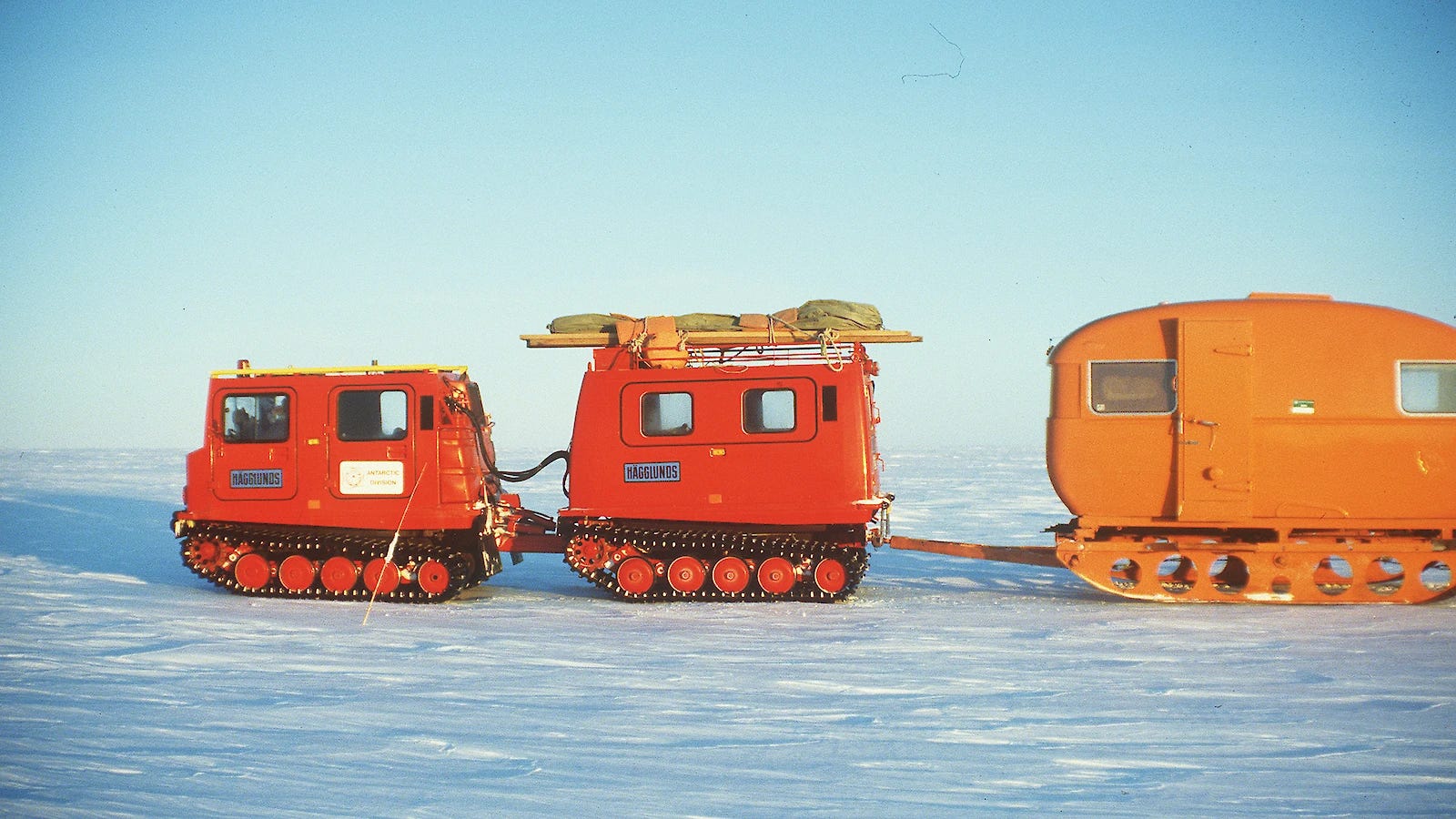
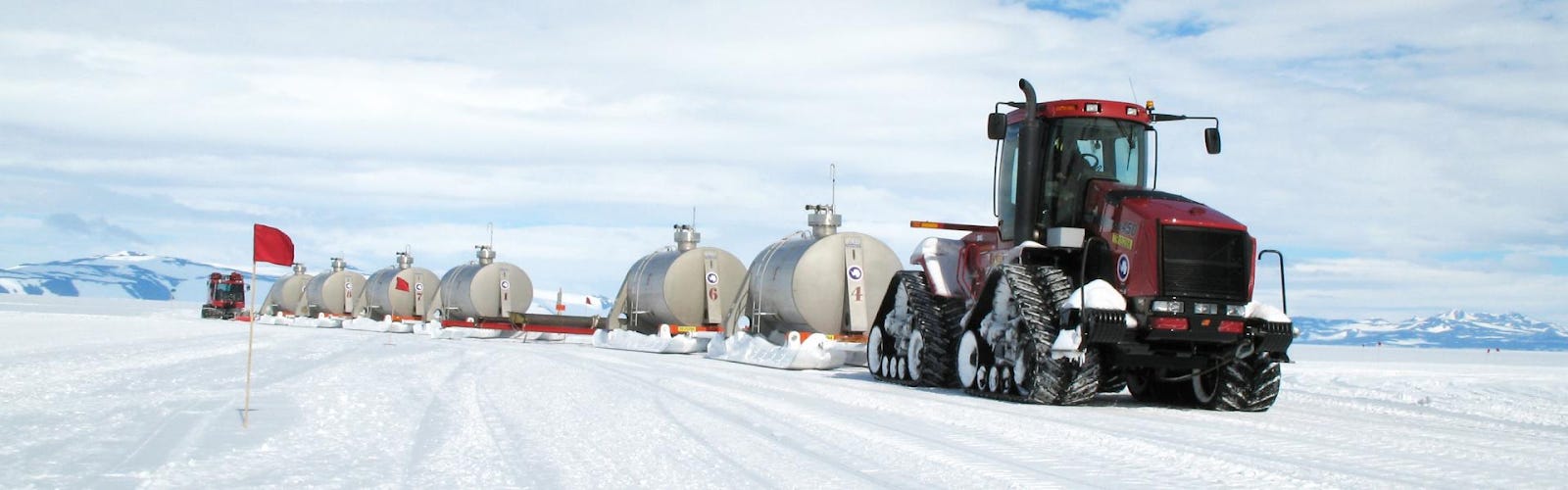
South Pole ground transportation as of 1963, 1985, and 2017.
The journey takes several weeks, but it’s absolutely worth it for the US Antarctic Program — each south-north trip can carry the same cargo as 33 LC-130 flights, and the three trips combined deliver about 300,000 gallons of fuel to the South Pole in flat, polyethylene fuel bladders.
The cost of a gallon of similar jet fuel in the contiguous U.S. is about $4. Getting an equivalent gallon of fuel to the South Pole costs closer to $40 — which makes the fuel bill for a normal winter at the South Pole a remarkable $18,000,000.
Power and Heating
The power plant at Amundsen-Scott South Pole Station is rated for 1 MW, but averages just about 600 kW output over the course of a normal week. If that power plant were to go down, researchers would be trapped in total darkness and an average external temperature of -56.2°F — so it has many, many layers of redundancy to ensure it never goes down.
There is backup power generation in the form of three CAT 3512B diesel generators, each individually rated for 750 kW output.
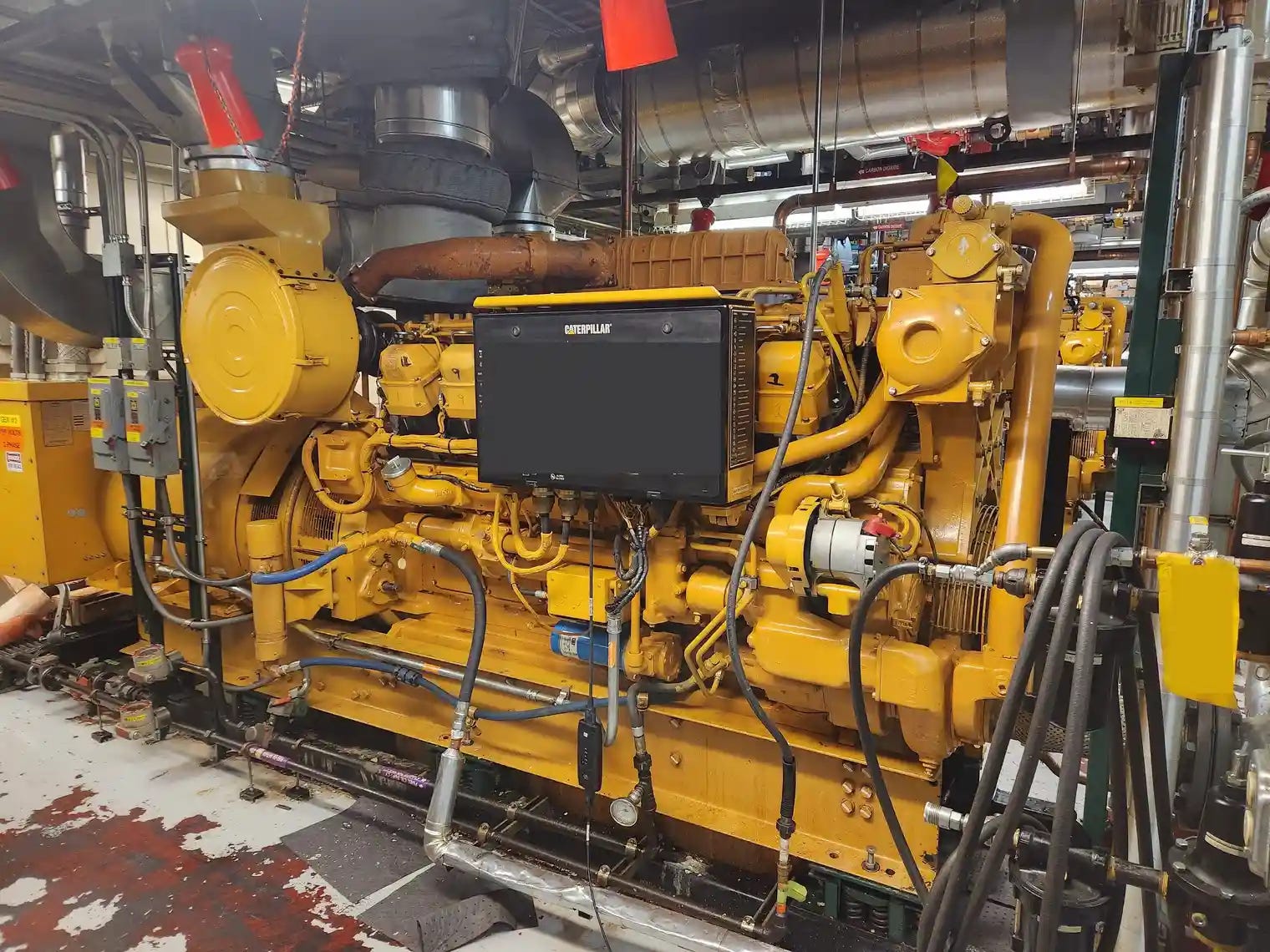
Only one is normally run at a time, meaning two could go down and the Station would remain fully powered. There is also another backup to the backup generators in what the Station researchers call the “lifeboat,” an emergency power plant with two 250 kW CAT 3406B generators that can be used either as central distribution or to backfeed into the main generators to get them restarted. The lifeboat can either pull from the normal, buried “arch” fuel tanks, or from a completely isolated, 68,000 gallon emergency reserve tank. These generators serve as both the power and heating for the Station, as the waste exhaust gases are circulated through pipes to radiators, underfloor heating, and heat exchangers in air handling units.
Why use diesel? It’s the least bad option available.
Geothermal doesn’t work, because the Station is sitting on top of two miles of ice. Solar doesn’t work, because the Station sees six months of total darkness; even at its peak, the sun never rises above 25 degrees over the horizon, so the sunlight passes through more atmosphere and generates less power than if the sun were directly overhead. They tried using nuclear power at McMurdo in the 1960s, but the reactor had 438 malfunctions in ten years of operation, and ultimately contaminated its surroundings and required a huge effort to dispose of the irradiated soil and rock. (It might be worth trying a new reactor at the South Pole that wasn’t built in the 1960s!) Belgium’s Princess Elisabeth station in Antarctica is primarily powered by wind energy, which isn’t a bad idea — that station sees regular 300 km/h winds — but it requires a lot of maintenance to deal with the cold, gusting winds, and ice buildup, to name a few issues, all of which require someone to travel outside the station to service.
There’s a reason that diesel, expensive though it is, is the fuel of choice for nearly all expeditionary missions around the world, from cell towers in India to American military bases in the Middle East: it’s reliable.
Food and Water
Luckily, Antarctic research stations are surrounded by freshwater. Unluckily, that water is frozen, meaning that stations must spend precious energy melting, pumping, and treating the water to make it safe for drinking, cooking, and the two weekly showers each researcher is allotted (each capped at two minutes long).
Amundsen-Scott station is supplied with freshwater via a “Rodwell,” named after the engineer who designed it, Raul Rodriguez, in 1963. The system is simple, but ingenious: you drill a hole in the snow and continuously feed hot water inside. The hot water melts the snow, which creates a large underground lake. As long as you keep feeding heat in, the well continues to expand and “produce” more water for you to pump out and use.
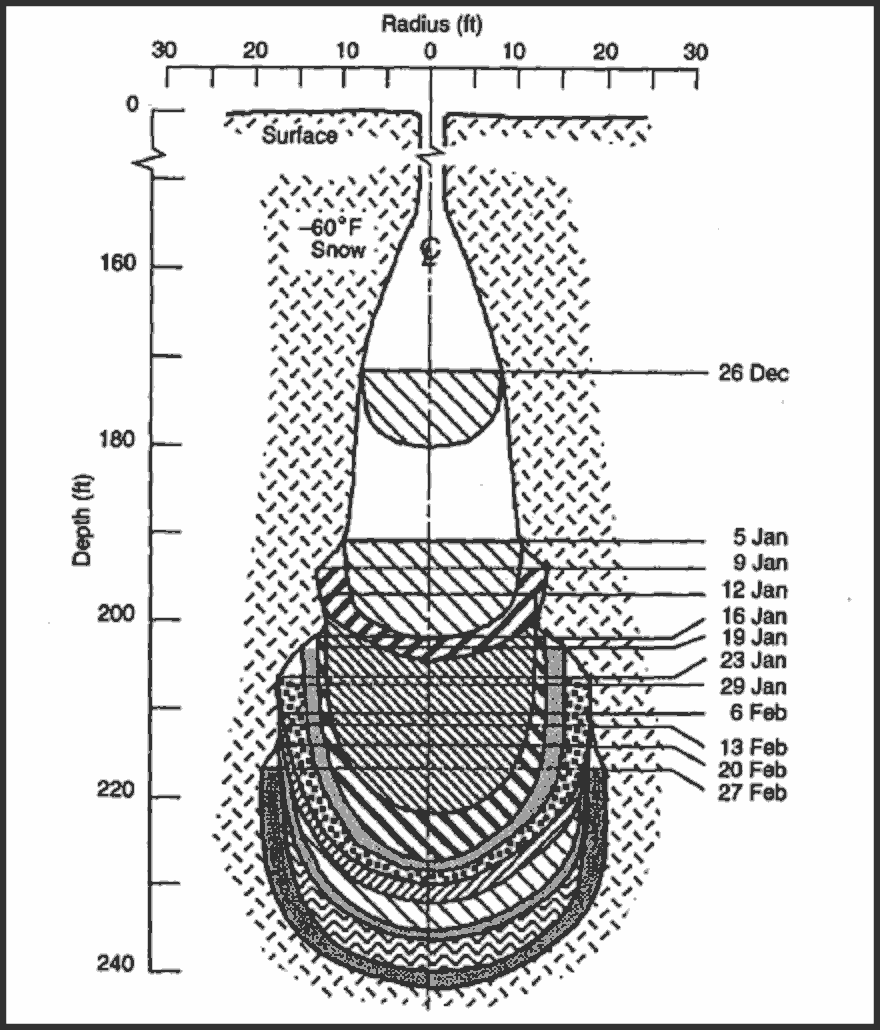
Between heating and pumping, a single gallon of water takes about 620 watt-hours of electricity to bring to the surface, or about enough energy to charge your laptop for a full week. It makes sense that Antarctic researchers are limited to two minute showers!
Food is considerably easier to store, and therefore to maintain throughout the winter, because the Antarctic ground ice can serve as a giant freezer. The Station’s food is stored at -70°F, so although fresh produce can only be flown to the station during the summer months, there is always plenty of meat. The Station also has a greenhouse, where it grows normal vegetables and fruits to allow residents to eat some produce during the long winter months — roughly 10 kilograms of fresh food per week, or half a kilogram (~1 pound) per resident per week.
Food is cooked for Station residents in a full, modern kitchen. Most of the appliances are electric, and water boils at 200°F rather than 212°F given the high altitude of 9,301 feet — but otherwise, you’d be forgiven for mistaking the kitchen for that of your college dorm.
Entertainment
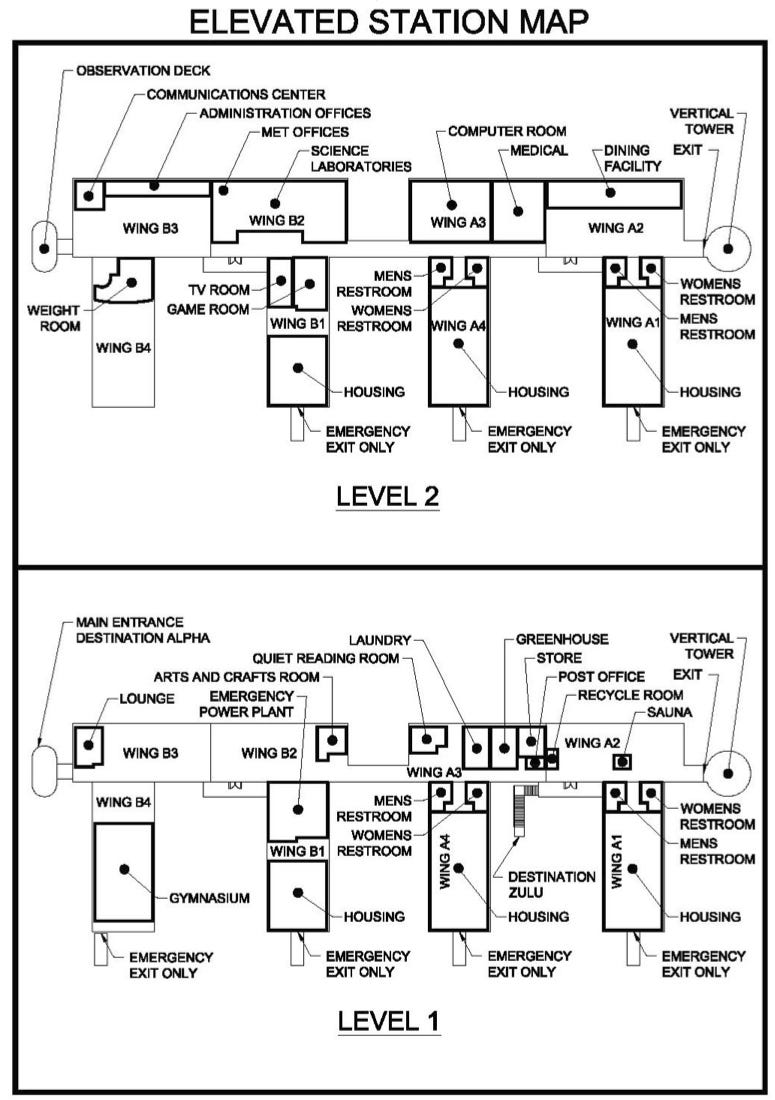
The floorplan of Amundsen-Scott Station looks mostly like you’d expect. A full third of the Station (roughly 25,000 square feet, or 500 sq ft per winter resident) is dedicated to housing. There are substantial science facilities (10,000 sq ft), medical and administrative facilities (5,000 sq ft) and a large dining area (4,500 sq ft).
But there is one surprise: 12,000 square feet dedicated to entertainment, or one sixth of the total Station area. This recreation space is divided among a weight room, a TV/game room, a dedicated room for arts & crafts, a quiet reading room, a sauna, and a basketball court.
Given the incredible premium on space at the South Pole, this is remarkable — but it makes sense, in light of the cabin fever that plagues Antarctic researchers. It’s difficult to keep 50 humans entertained (and sane) in a confined space for six months of total darkness!
And, unfortunately, the Amundsen-Scott base lacks reliable internet access. There is no fiber, nor microwave connection, making the base entirely reliant on spotty satellite internet. Starlink works, but unfortunately interferes with some of the radio telescopes on site, so the base is forced to use medium-earth-orbit (and low throughput) constellations like Iridium to get connected to the internet — but because such constellations have been designed to service the Earth’s middle latitudes, and not the poles, service that far south is intermittent at best.
Geopolitics
The challenges with taming Antarctica are not all technological. Per the Antarctic Treaty of 1959, the continent is to be peacefully shared among all the nations of earth — and achieving global cooperation with zero defectors has proven to be just as challenging as it seems.
Contrary to popular belief, the Antarctic Treaty does not have a 2048 expiration date. Signed in 1959 and effective from 1961, the Treaty was originally created to limit the surface area of the Cold War — both the United States and the USSR didn’t want to fight on another, frozen front, so the two superpowers drew up the Treaty to cordon off the South Pole from conflict. In doing so, they made this peace permanent; even after 2048, when the Treaty will be reviewed, all changes must be unanimous.
If you ask The Treaty, there’s only one reason why Antarctica is of interest to so many nations around the world: science. Article I mandates that the continent is only to be used for peaceful purposes; Article II provides for freedom of scientific investigation and cooperation. Article IV establishes a more-or-less permanent moratorium on any territorial claims made by nations. The additional “Protocol on Environmental Protection” to the treaty, signed in 1991, prohibits mining Antarctica’s resources “except for scientific purposes.”
Perhaps unsurprisingly, both China and Russia have tested the limits of those “scientific purposes” in recent years, leading many to suggest that their interest in the continent is not strictly academic.
Russia, which succeeded the USSR and remained party to the treaty, seems particularly scientifically interested in oil discovery. In 2012, Russia drilled a hole through the entire ice sheet to reach Antarctica’s Lake Vostok, more than two miles below the surface, an obvious technical precursor to future mining activity. Additional drilling activity has been excused away as “seismic surveys,” but then Russia announced their discovery of a massive 511 billion barrel oil and gas reserve in Antarctica. For context, the total global proven reserves of oil are around 1.5 trillion barrels. That’s a lot of scientific value!
China, for its part, seems to focus its Antarctic research on commercial fishing activity. In 2021, China and Russia teamed up to block the creation of new marine protected areas in the Antarctic ocean, citing the need for “further scientific research” of the regions. China’s (ostensibly commercial, but certainly government-sanctioned) long-distance fishing fleet has found the area quite lucrative, and has been accused of catching more krill than is allowed under the Antarctic Territory System. In 2025, Chinese company Fujian Zhengquan deployed a brand-new, $100 million krill “super trawler” to the Antarctic seas, in yet another example of their aggressive expansion in the region.
These more obvious subversions of the spirit of the Antarctic Treaty have been supplemented by smaller instances of bad behavior by both actors: China built a new research station without submitting the right paperwork first (perhaps a triumph of the engineering state over our lawyerly impulses); China’s new stations have been accused of having equipment that could interfere with US satellites on orbit, and collect signals intelligence from the American McMurdo station; Russia has sought to avoid mandatory check-ins by other nations by, for instance, parking planes on the runways of Russian stations to prevent inspector airplanes from landing.
In response, the United States is planning to slash its own Antarctic funding in half.
Ad Astra, Per Antarctica
The fact that humanity has at least partially tamed Antarctica is nothing short of a miracle. It is still difficult to keep humans alive in the coldest, driest desert on the planet — but thanks to our logistical skills (and sheer pigheadedness about the importance of exploration), we have established a permanent home at the South Pole.
This, really, is why I love Antarctica. Not for the fish, or the oil, or the propaganda value of announcing net-zero-emission research stations, but for the love of the game. By this I mean as a symbol of human exploration and of our ability to do things just because we want to.
Such symbols are important, especially in a world that seems to think that the age of exploration is over — that we have seen the entire Earth, and had better look to the stars to rekindle humanity’s adventurous spirit. There is still a lot of exploration to be done on Earth and above it! We can search within underground caves and tunnels, at the bottom of the ocean and the top of the stratosphere, and beneath the massive ice sheets of Greenland. We can make the Sahara desert into a rainforest, re-fill the Great Salt Lake, and make the abandoned Salton Sea lush again. We can find ancient temples buried in the rainforest. We can reprogram our genes. We can create artificial minds.
And we can venture into the cosmos. As our astronauts complete the Artemis II mission around the moon and head back to Earth over the next few days, I hope that we can use the momentum from their trip to accelerate human exploration. Cutting Antarctic funding is a tragedy; deorbiting the International Space Station (rather than boosting it up, to make it humanity’s first orbital museum) is a travesty. We should be scaling up, not back, our ambitions to explore our planet and our universe.
Why?
Because it is there to be explored.




This newsletter is provided for informational purposes only, and should not be relied upon as legal, business, investment, or tax advice. Furthermore, this content is not investment advice, nor is it intended for use by any investors or prospective investors in any a16z funds. This newsletter may link to other websites or contain other information obtained from third-party sources - a16z has not independently verified nor makes any representations about the current or enduring accuracy of such information. If this content includes third-party advertisements, a16z has not reviewed such advertisements and does not endorse any advertising content or related companies contained therein. Any investments or portfolio companies mentioned, referred to, or described are not representative of all investments in vehicles managed by a16z; visit https://a16z.com/investment-list/ for a full list of investments. Other important information can be found at a16z.com/disclosures. You’re receiving this newsletter since you opted in earlier; if you would like to opt out of future newsletters you may unsubscribe immediately.