



America | Tech | Opinion | Culture | Charts

Head In The Neoclouds
Earlier in the 20th C., the Southern Pacific Railroad had a surplus of building rights on cleared land that connected various cities and towns across the country. A railroad’s right of way is much wider than the physical track, leaving plenty of buildable corridors to spare. So, the railroad built a communications network alongside the track, dubbed Southern Pacific Railroad Internal Networking Telephony, which it began commercializing for broader use in the 1970s. But then two things happened at once: the long-distance calling cartel came to an end, and fiber optic cables became commercially viable. The communications corridors were repurposed for fiber, and the network eventually became known by the acronym Sprint, making former railroad assets a backbone of the telecom revolution.
Railroads were not the only ones who repurposed their physical networks for a much bigger commercial technology. In the 80s, the Williams Company converted its empty natural gas pipelines into conduits for fiber and created WilTel, which was sold and eventually renamed WorldCom. In the 90s, one-way coaxial cable built for the cable TV business, underwent a massive and expensive upgrade to become the broadband consumer internet infrastructure for Comcast/Charter.
All of which brings us to another set of businesses sitting on preexisting infrastructure that has been dramatically repurposed and repriced to meet the demands of an emerging technology: neoclouds. Just to generalize a bit, neoclouds were in the energy- and compute-intensive business of crypto-mining, but then, of course, AI came along. Suddenly, having the power-rights, infrastructure and know-how to build and manage intense computational demand (and, in CoreWeave’s case, a lot of GPUs), has become one of the hottest games in town:
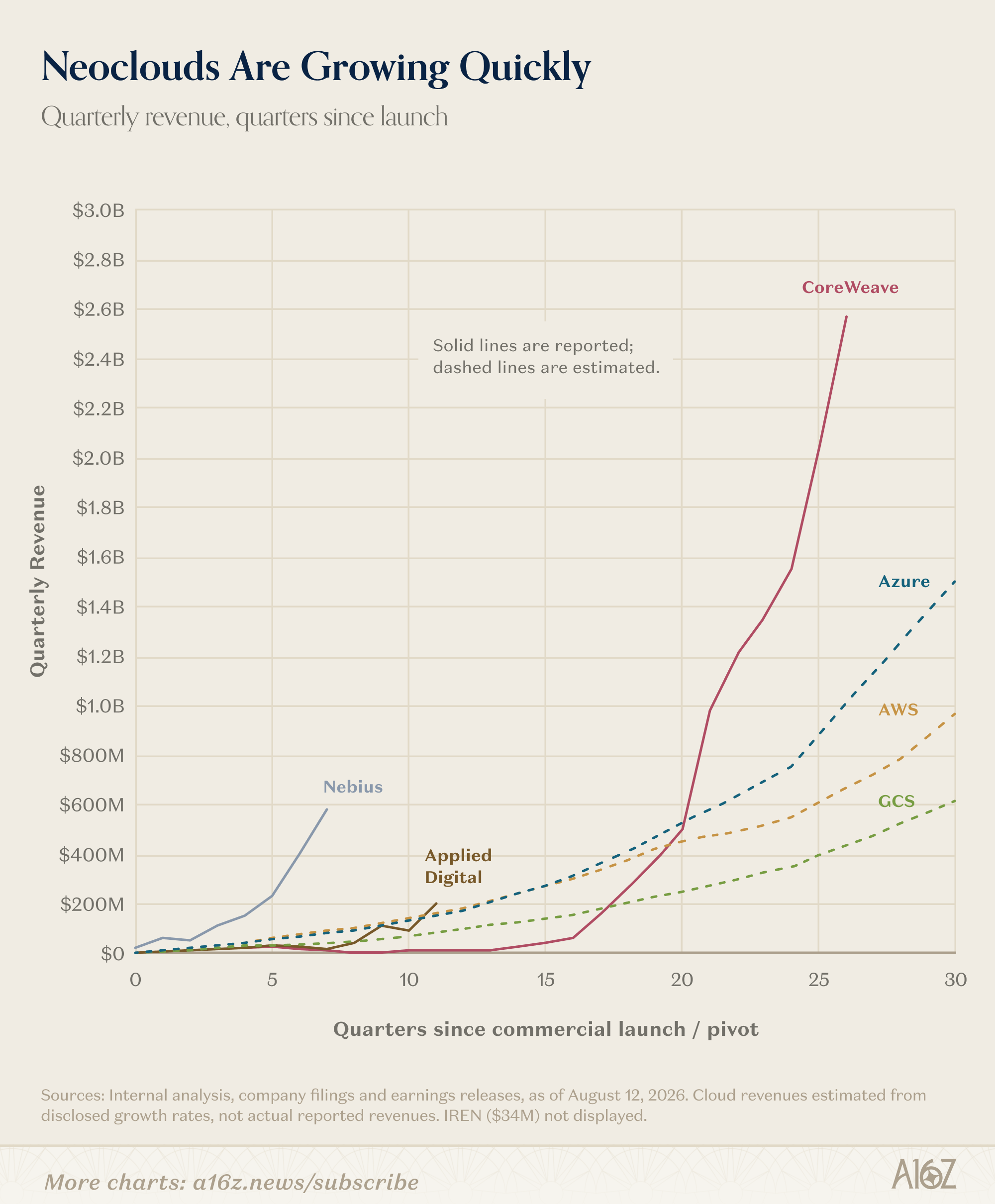
It’s not an apples-to-apples comparison, of course, but for the three largest publicly traded neoclouds, revenue growth has been a thing to behold.
We can only estimate the early-innings of hyperscaler cloud revenues, but you get the idea: neoclouds are growing very quickly, and at a much faster pace than the big three of cloud services maintained when they got started.
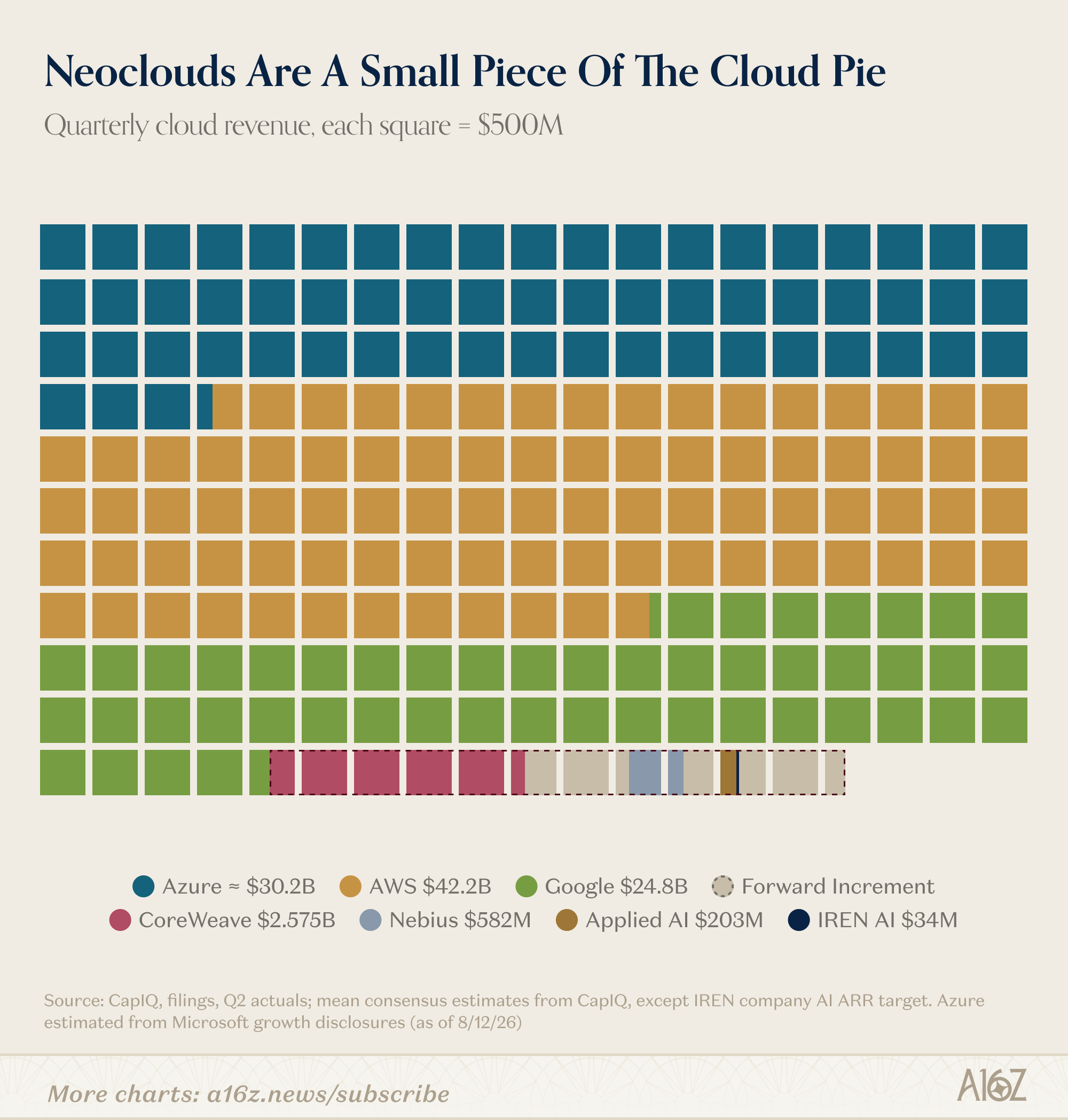
To be clear, neoclouds are still a fairly small player in the broader universe of selling compute:
They also have a long way to go before they get anywhere near as large as the hyperscalers:
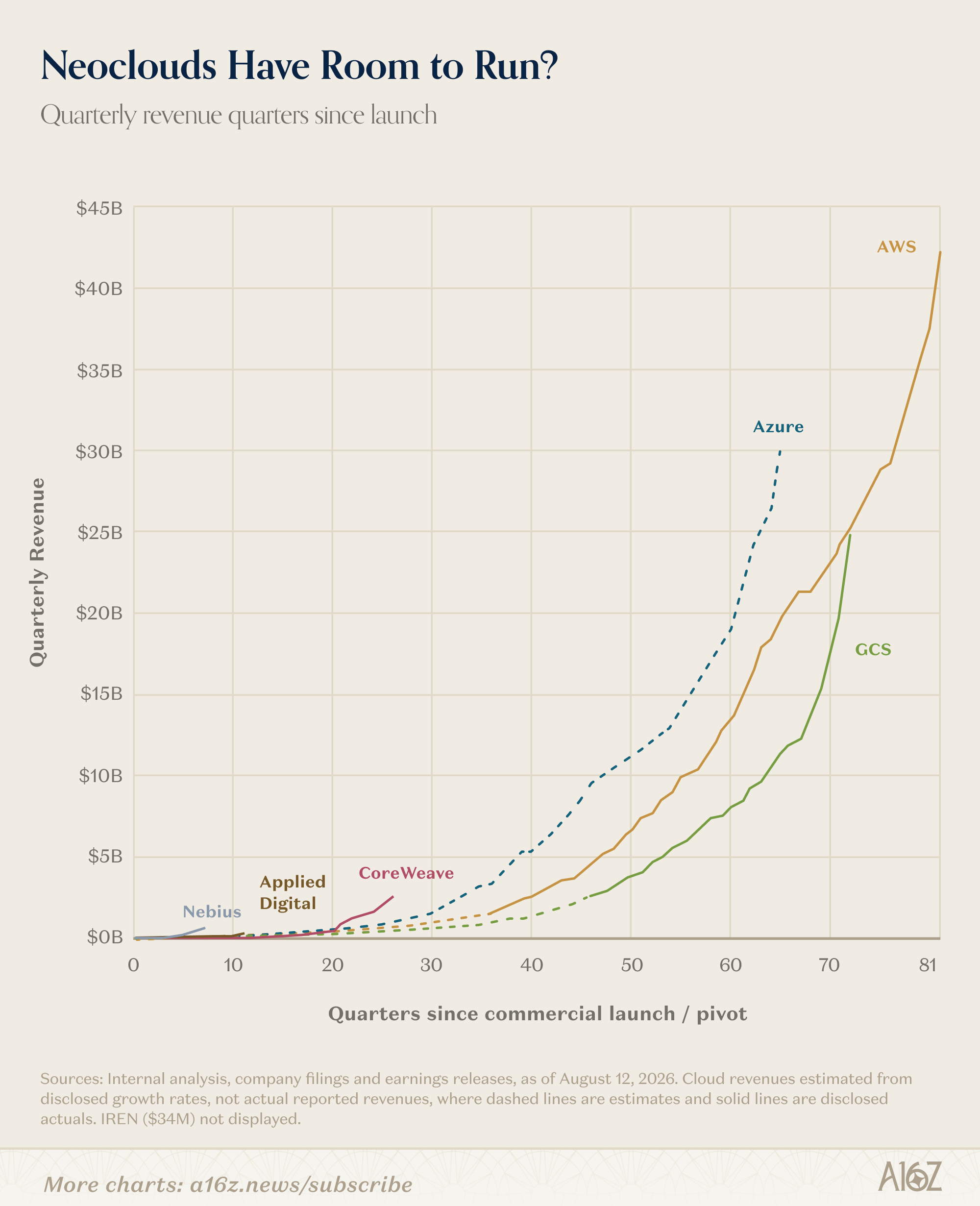
The hyperscalers generate orders of magnitude more revenue per quarter than the neoclouds, but at the same time, it’s taken CoreWeave ~25 quarters to achieve the same $2.6B as AWS generated by quarter 40 since launch. Again, these are very fast growing businesses.
With all that growth, and all the AI tailwinds, you’d think that investors would be thrilled, and to some extent, they are, but it’s a more nuanced story:
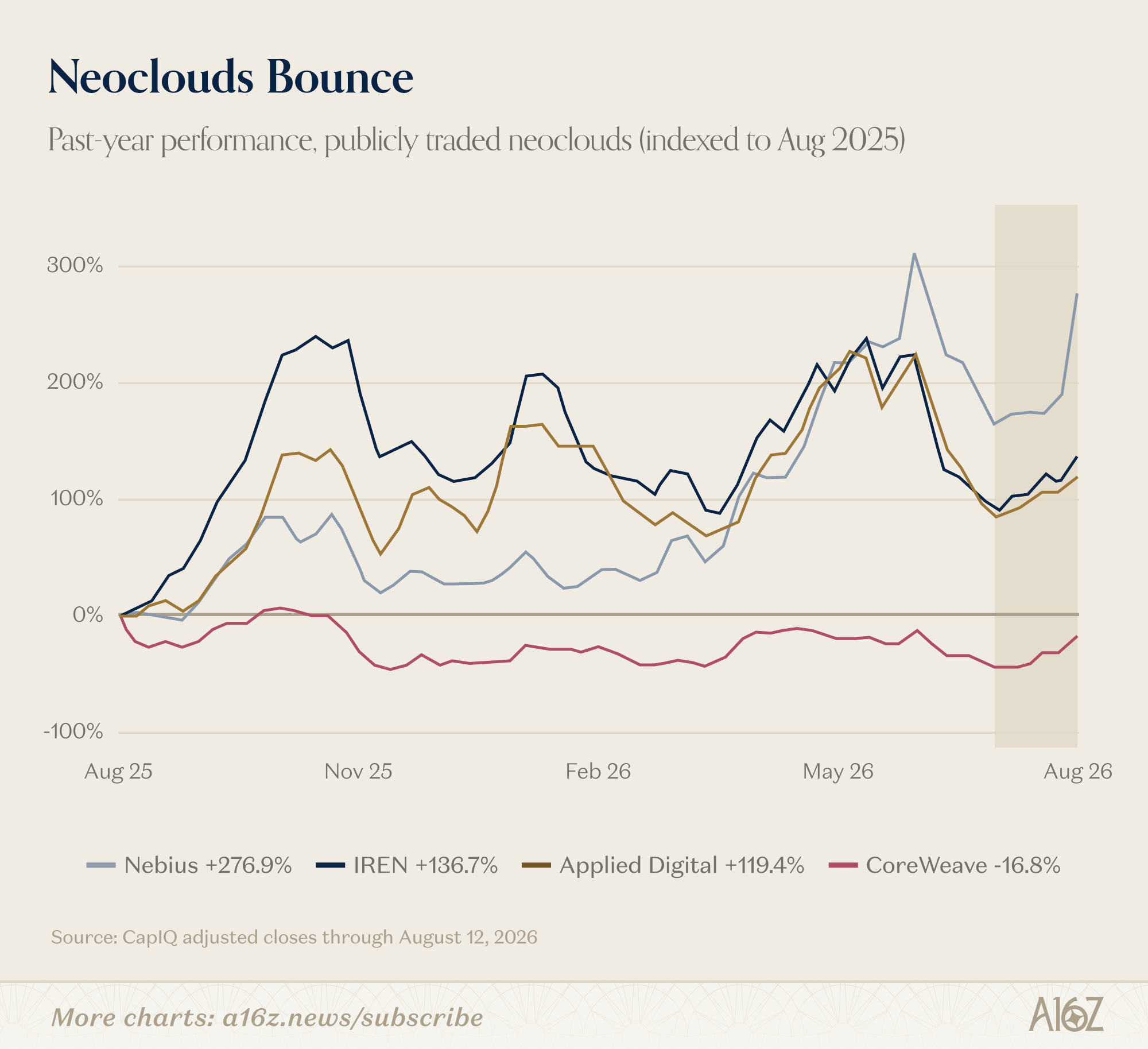
While everyone had a pretty good earnings week, over the past year CoreWeave is still down ~16% (and only Nebius has come close to its previous highs). So, it’s a good story, for the most part, but certainly less-so for the largest neocloud of the bunch.
Part of the reason for the somewhat muted performance of late is that a lot of this growth is arguably priced-in:
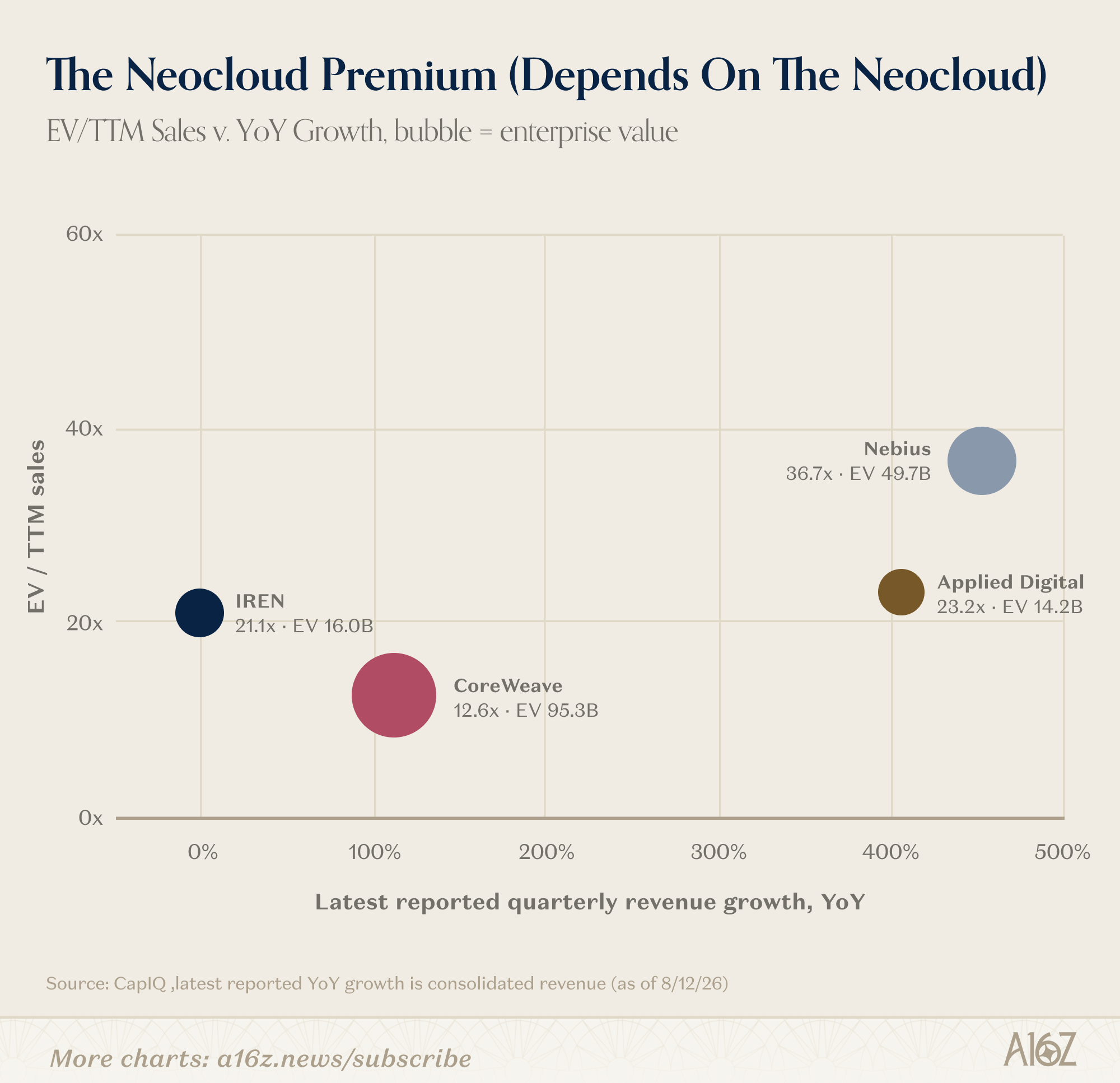
Sales multiples aren’t the best choice for capital-intensive businesses like neoclouds, but they’re useful for illustration purposes. The smaller, but faster growing Nebius and Applied Digital trade at a much higher premium than the much larger CoreWeave, which is still doubling, but it’s not quite the 400%-450% growth at the top of the leaderboard.
The real issue, such that there is one, is not growth though, it’s longer-term profitability. Neoclouds need chips, power and physical infrastructure to grow, and that’s not cheap:
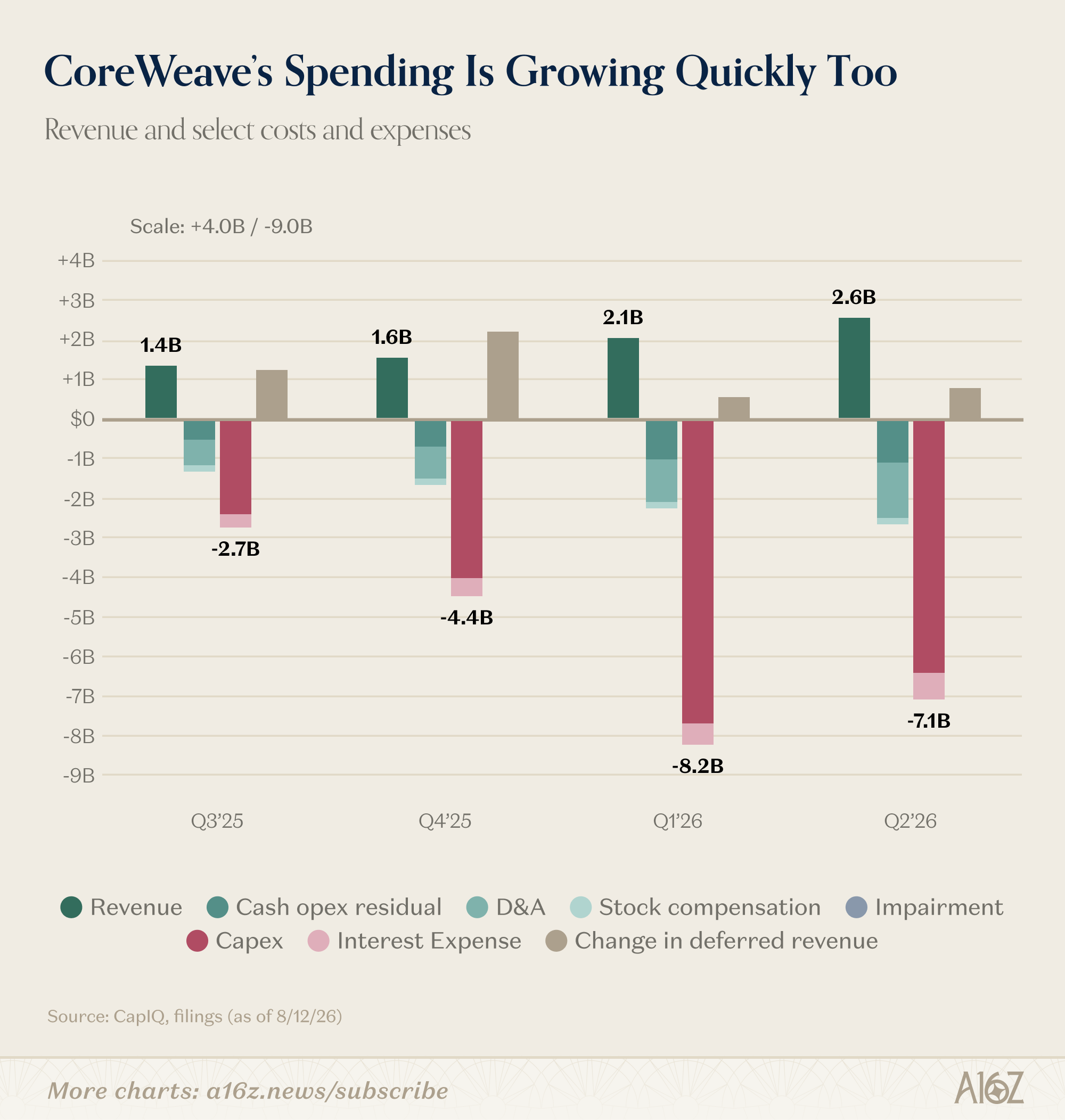
Just taking CoreWeave as an example, revenue growth is substantial, yes, but Capex is even more substantial. Other massive costs include depreciation for the chips, which is more than half of revenues, and the rising interest expense on all the debt that’s been used to advance the expensive buildout.
Charts is not here to express a view one way or another on the success of neoclouds or their current stock prices. Other than being topical, the point here is that neoclouds represent a nice little microcosm of the push-and-pull of the broader AI trade: on the one hand, historically fast-growing businesses in a vertical that has grown much larger than anyone thought possible, and is growing even bigger still (i.e. compute); while, on the other hand, historically expensive businesses to build with massive (and depreciating) fixed infrastructure costs.
Return of Horizontal SaaS?
Just a quick check-in at the shifting contours of the saaspocalypse.
One of the biggest losers of the great software selloff had a pretty good month:
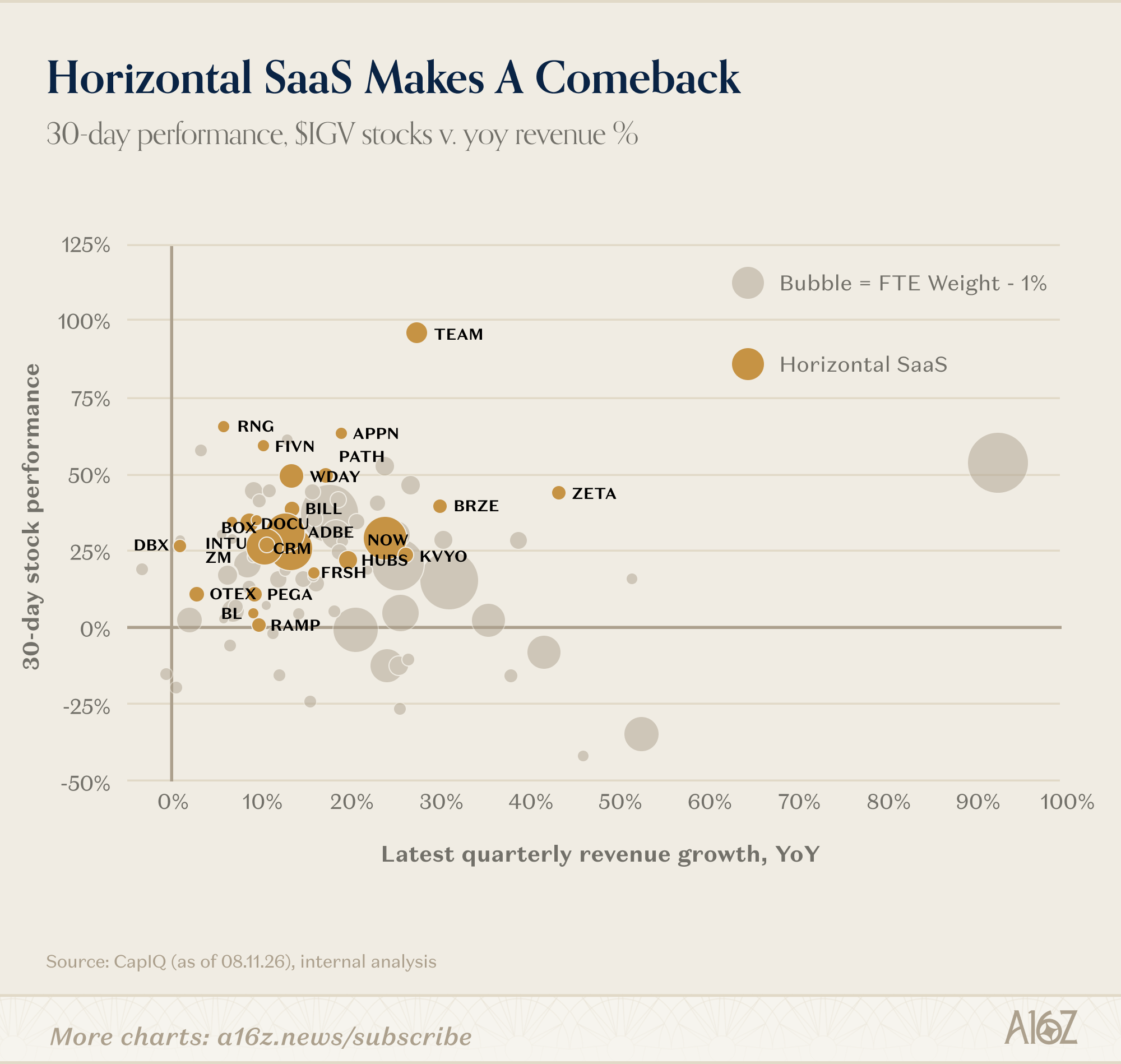
Horizontal software businesses did some of the best work in the IGV software ETF over the past 30 trading days (although they’ve given back some of those gains from the date this data was collected).
In general, fundamental performance has held up, and Atlassian especially has defied expectations for an AI-driven demise. The productivity software pulled off a “double-beat and raise,” with its cloud business growing 31% YoY (and the revenue backlog growing even more). But the key was perhaps some evidence of AI as an accelerant rather than a headwind. The company flagged widespread adoption of Rovo, the Atlassian AI assistant, and noted that Rovo-users were growing their spend at nearly double the rate of non-users.
Good for Atlassian, good for Rovo, good for horizontal saas. It remains the case, however, that horizontal saas is valued slightly less than other software:
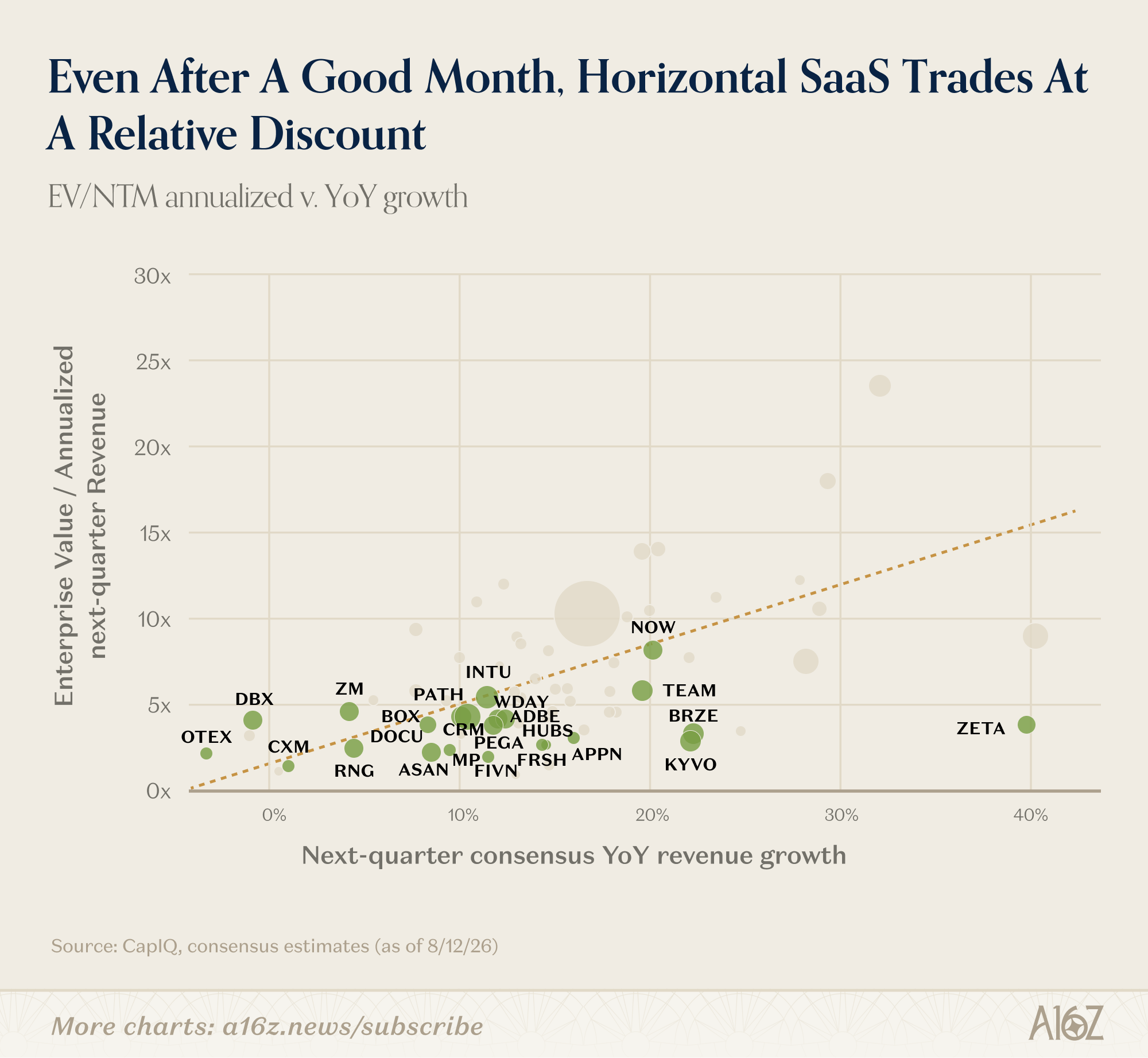
With some exceptions, forward revenue multiples for horizontal saas companies (including Atlassian) are generally below the trend correlation of growth to multiple.
Again, it was a relatively good month, but it will take a lot more than a month to convince the market that the saaspocalypse has been cancelled.
Unless, of course, your software is in the business of cyber and observability, in which case, there is no saaspocalypse and never was one:
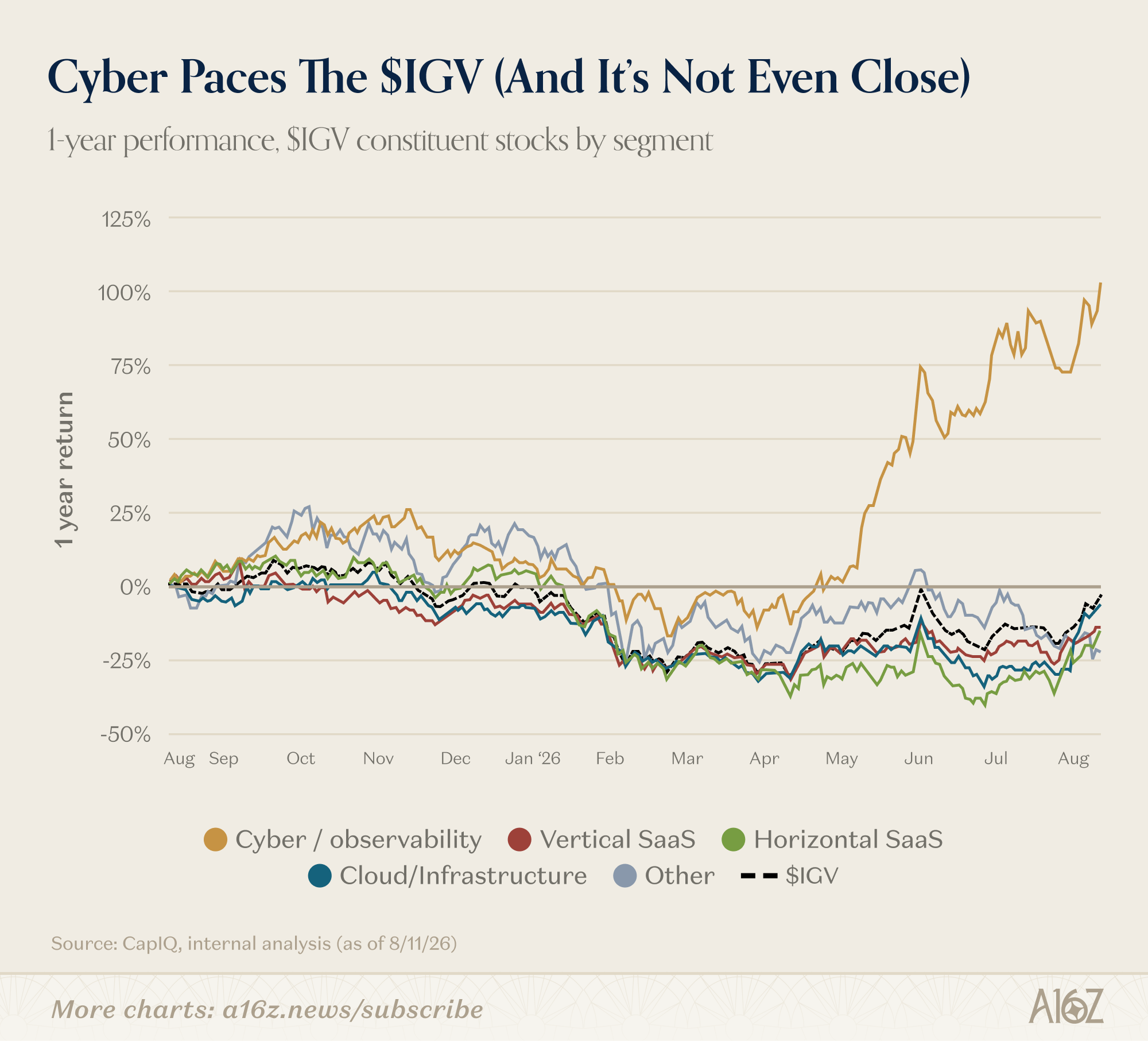
The cyber category continues to run away from the IGV field, in this case, with AI as a tailwind—the presumption is that AI is heightening the perceived risk of cyber threats, and no buyer is going to vibe-code their own solution.
Time will tell of course if the thesis bears out, but for now, when it comes to incumbent software, the trials and tribulations are the opposite of indiscriminate: investors are highly attuned to whether AI is likely to giveth or taketh away, and they’re updating their priors with every fresh batch of data (as they should).
Towards an Efficient Frontier of Token-Maxxing
The landscape for model usage, token consumption and managing token spend, continues to evolve in all kinds of interesting ways.
Take Databricks, for example. Rather than try a winner-takes-all approach to “what model should we use?” or “what model is best?” or simply give engineers a budget, and say “make of this what you will,” Databricks said “what if we engineer a solution that routes the right tasks to the right models?”
They’re not the only one of course, but Databricks built a “Smart Router,” and they like what they see:
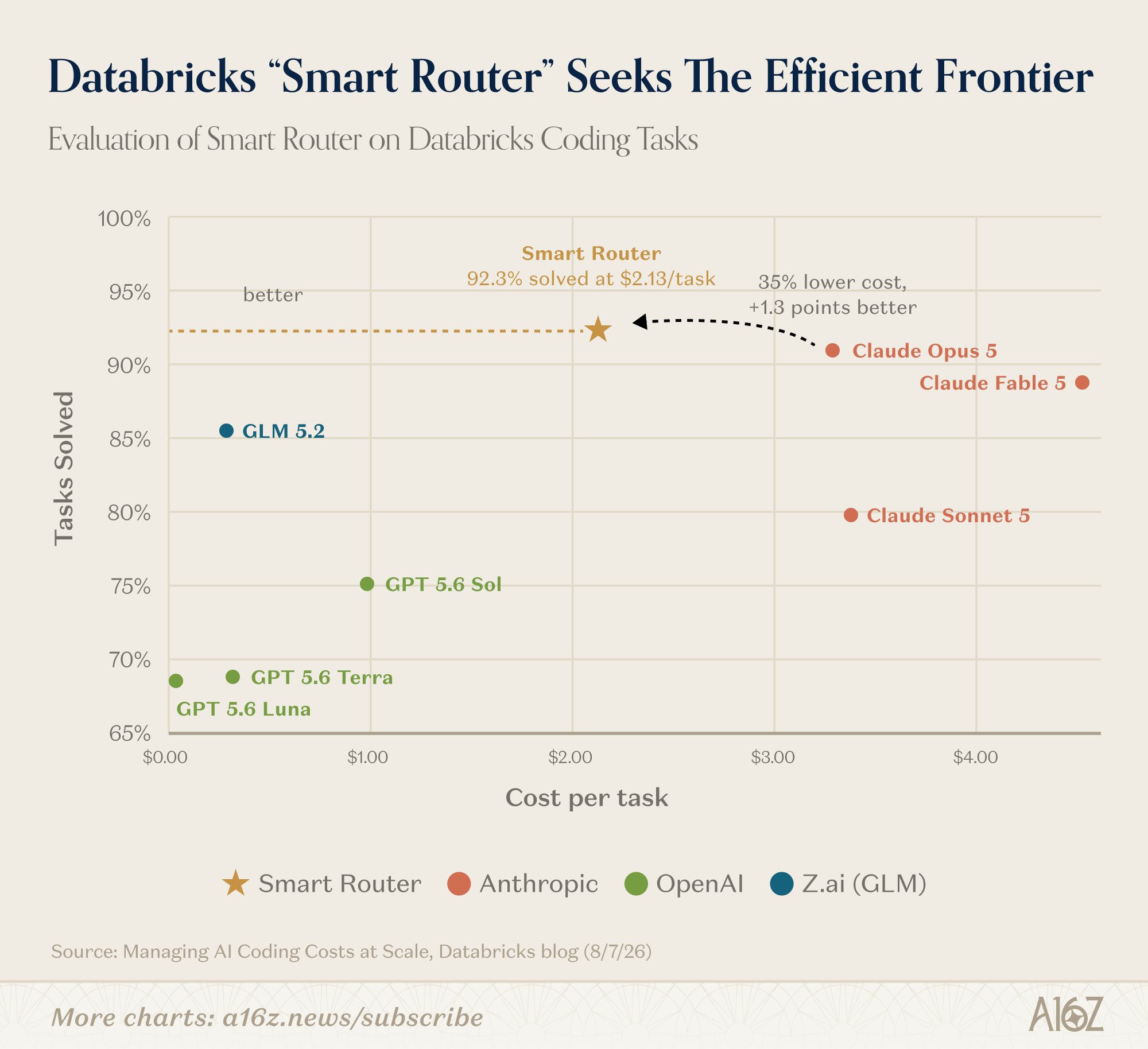
Apparently, the Databricks router was able to “consistently reduce average task cost by more than 30%” by using more powerful and more expensive models, when necessary, and using less powerful and less expensive models, when possible.
In general, it’s hard not to see the pursuit of an efficient frontier of token spending as a very good thing. It means that demand is continuing to grow, and that use-cases are evolving at not only the peak end of performance, but also for less-peak models (which, in the first iteration of the doomer-tale, were supposed to rapidly become obsolete).
As we’ve noted before, that efficiency increases the surface area of demand is precisely the Jevons-like dynamic that you want to see:
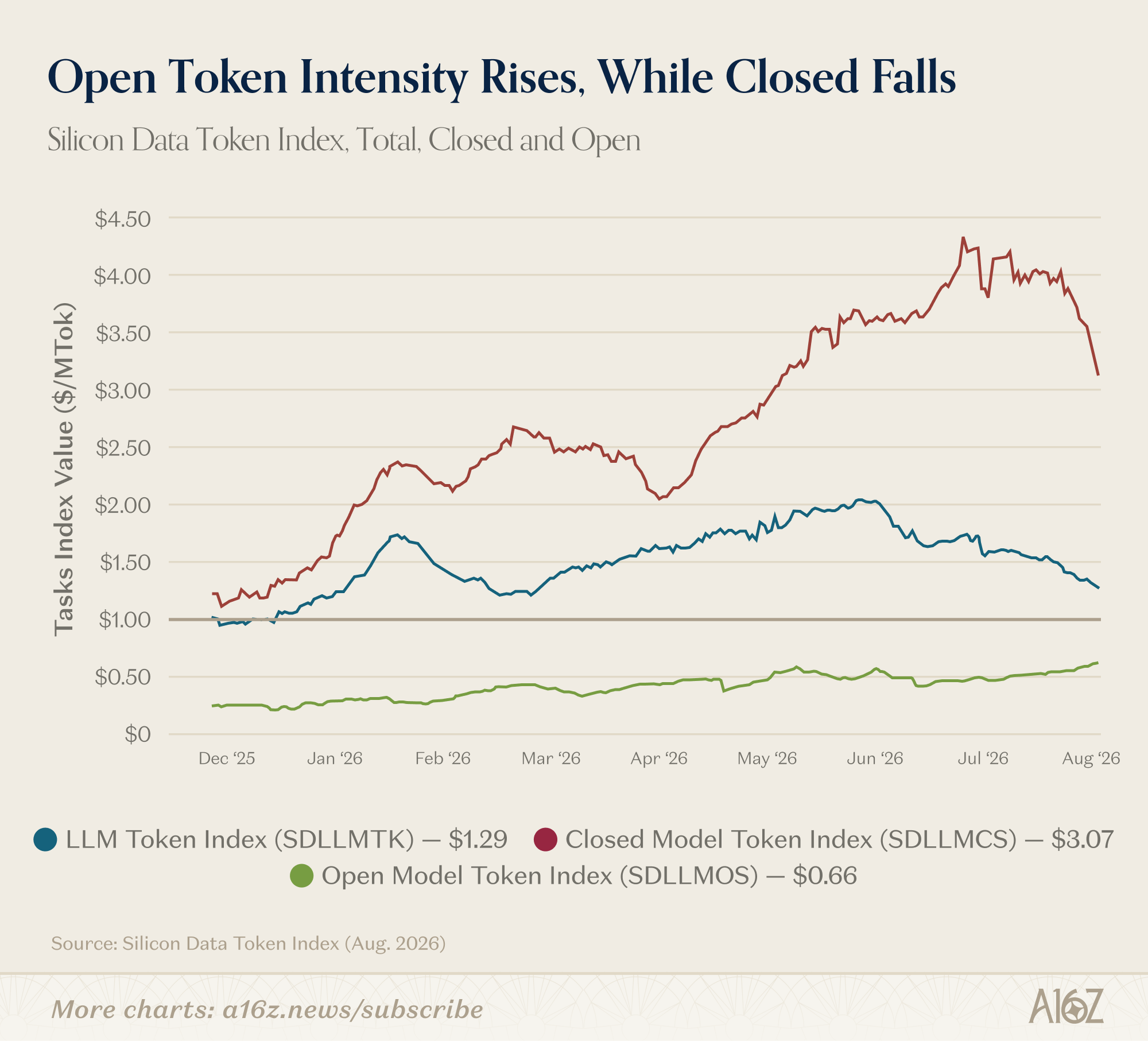
Silicon Data’s token price intensity index shows that overall price intensity has been declining, particularly as cheaper open models increase their share of a growing market. To reiterate a point about this commonly misunderstood data, the indexes are measuring the cost-intensity of token spend, not the absolute dollar value—it’s a combination of the number of tokens consumed and their blended cost, which means that the total dollar value (and number of tokens consumed) can still rise, while the $/token falls.
The key though is that overall demand continues to rise, and an efficient frontier of pricing and model-selection should only help, especially because “AI demand” (and “AI Adoption”) is not one thing. There are still huge gaps between power-users and everyone else, which is a pretty good indication that “use the best model all the time,” is a good approach perhaps for some companies, but certainly not all of them—that there are rapidly emerging alternative approaches to choose from, is net good overall.
According to Ramp’s data, everyone is spending more on AI, but the differences in spend between the median and the top decile (and between the top decile and centile) are enormous:
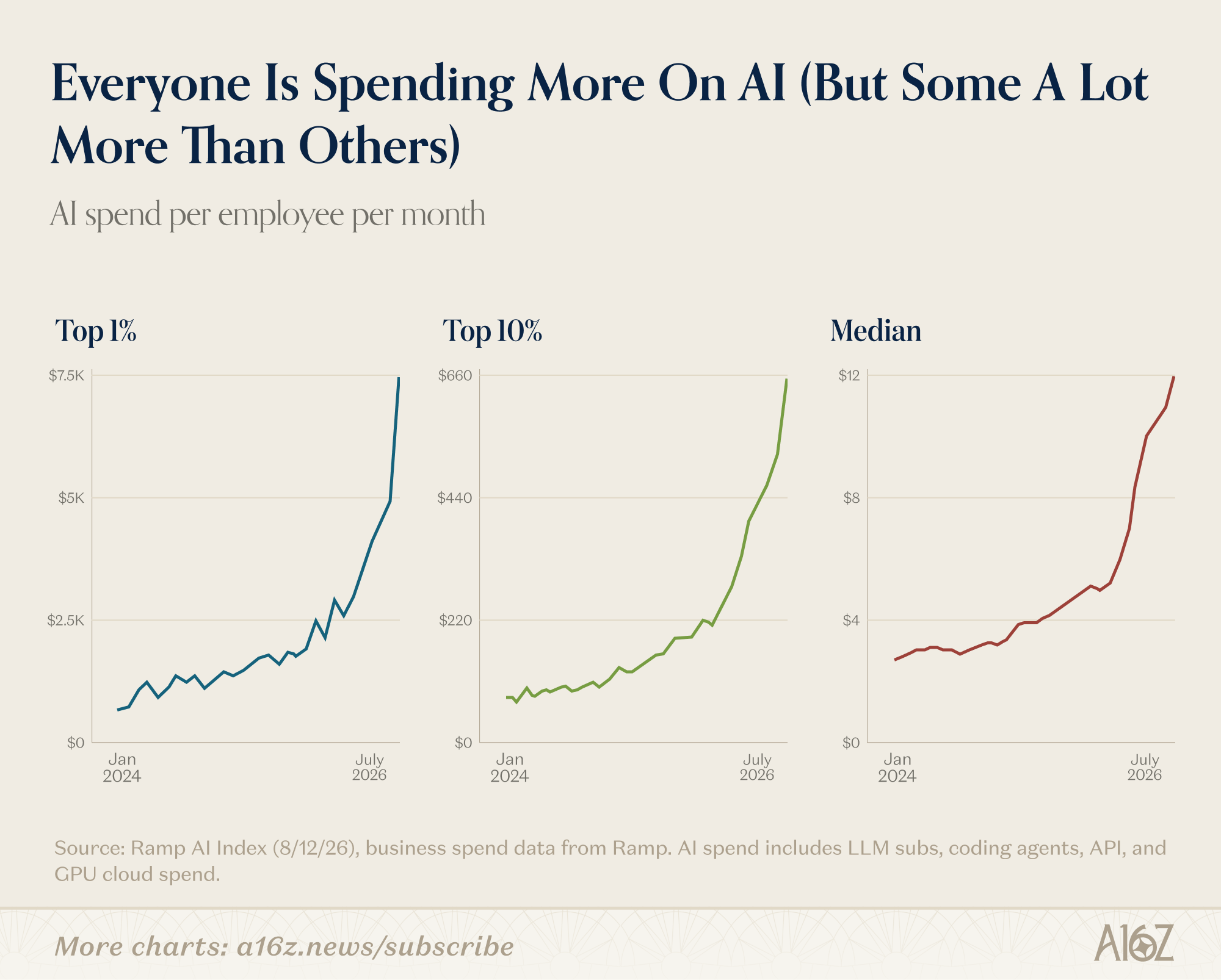
Ramp’s data tends to skew towards tech companies, so keep that in mind, but the top 10% of firms are spending ~50x more per employee than the median.
That distribution isn’t likely to be an accident. The firms that have figured out how to unlock more value from their spend, presumably are the ones spending the most (if not in all cases, then in a lot of them).
An analysis from BCG of 107 public companies found that the top two quintiles of token usage had considerably faster revenue growth than the field:
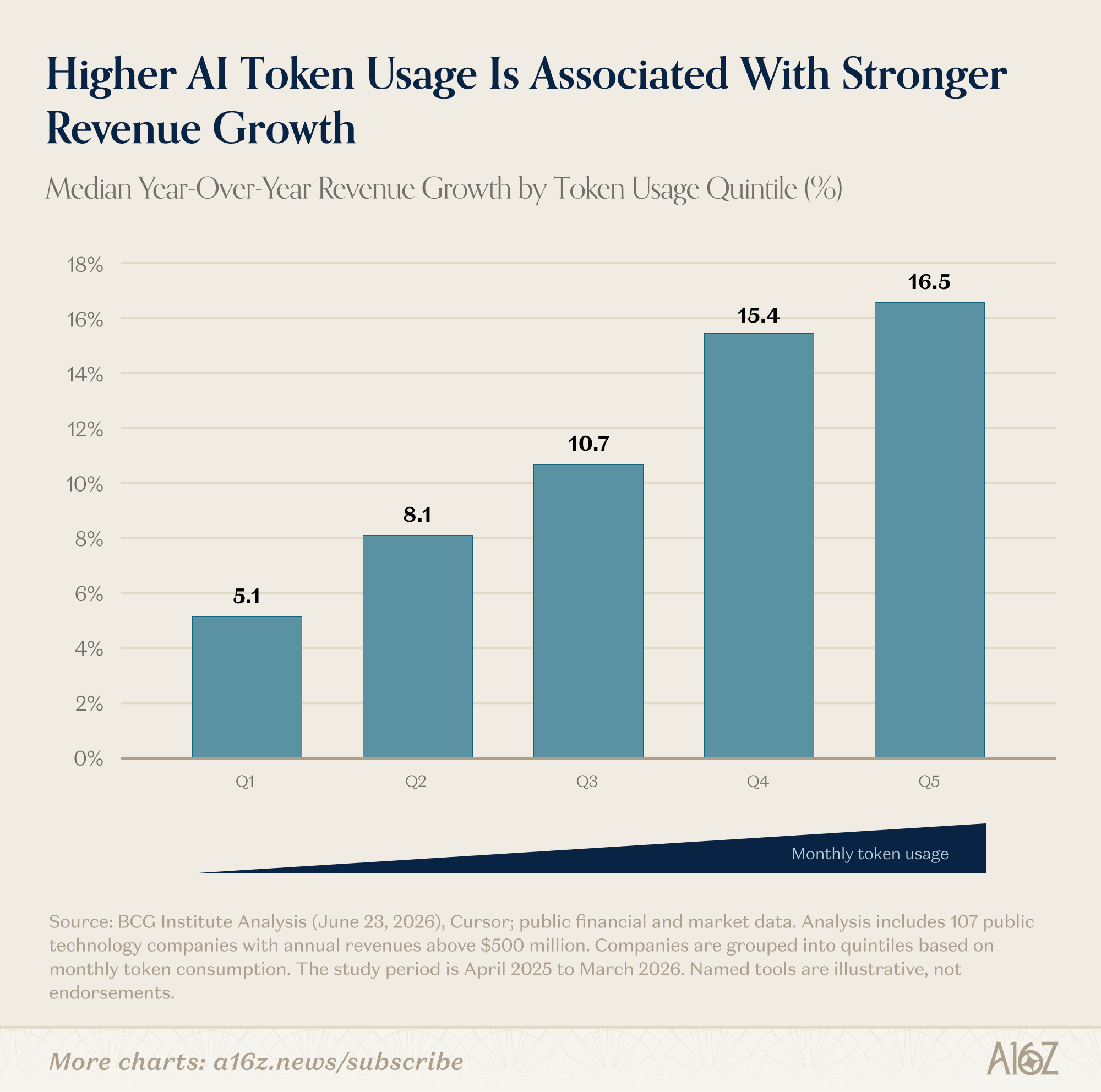
The point here is that token demand and efficiency are mutually reinforcing—the more value firms get, the more they consume. There’s of course some give and take, and R&D always includes some upfront costs, but unabashed “tokenmaxxing” was never going to be a useful approach for the vast majority of firms, so it seems like a very good thing that they increasingly won’t have to.
Lab Talent Wars
New Media just saw two excellent team members move to OAI, so we’ll conclude with just some fun charts on frontier lab hiring.
Dario Amodei recently commented that he was concerned that employees were starting to prioritize money over mission, and according to data from Levels.fyi, he may be on to something:
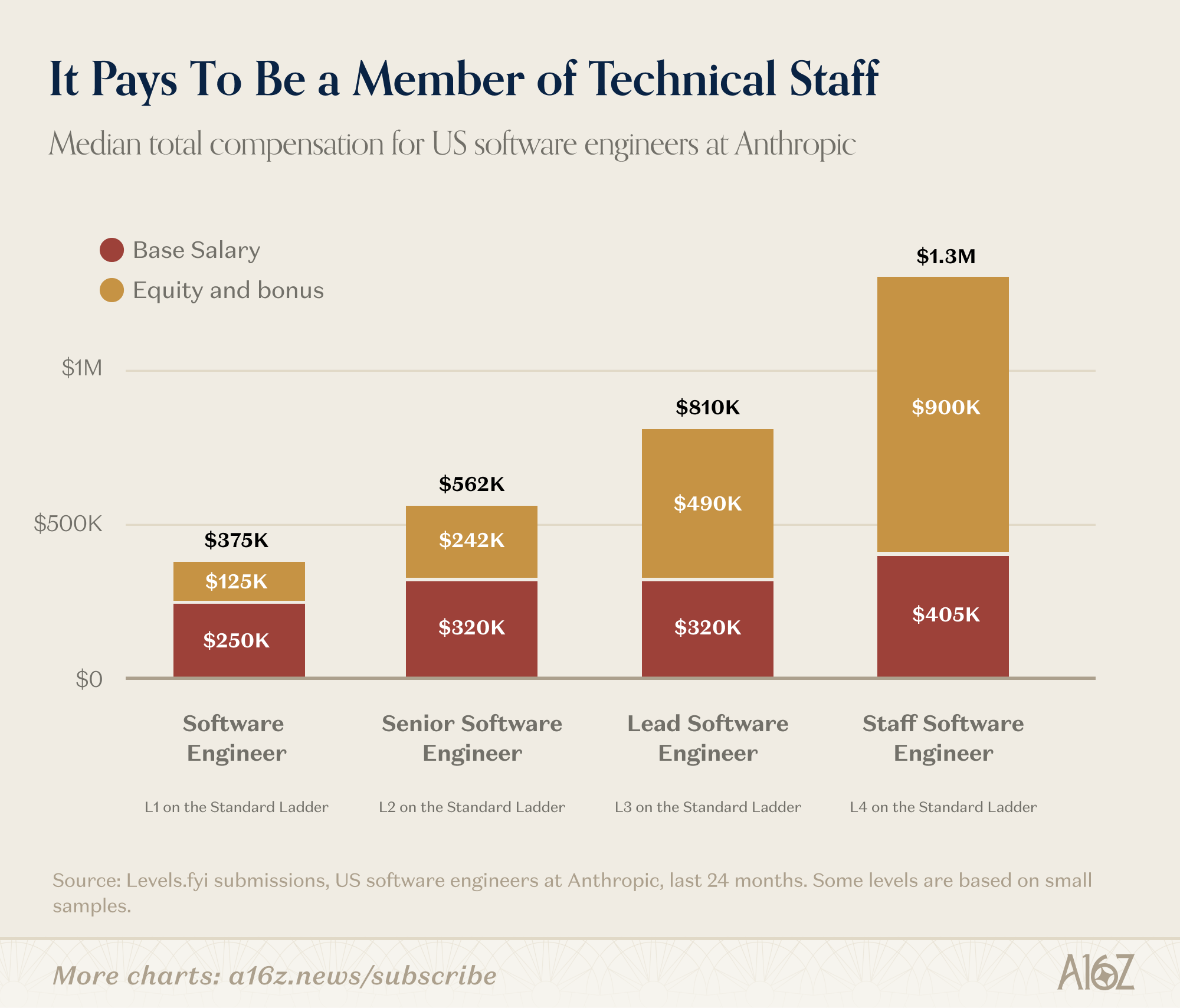
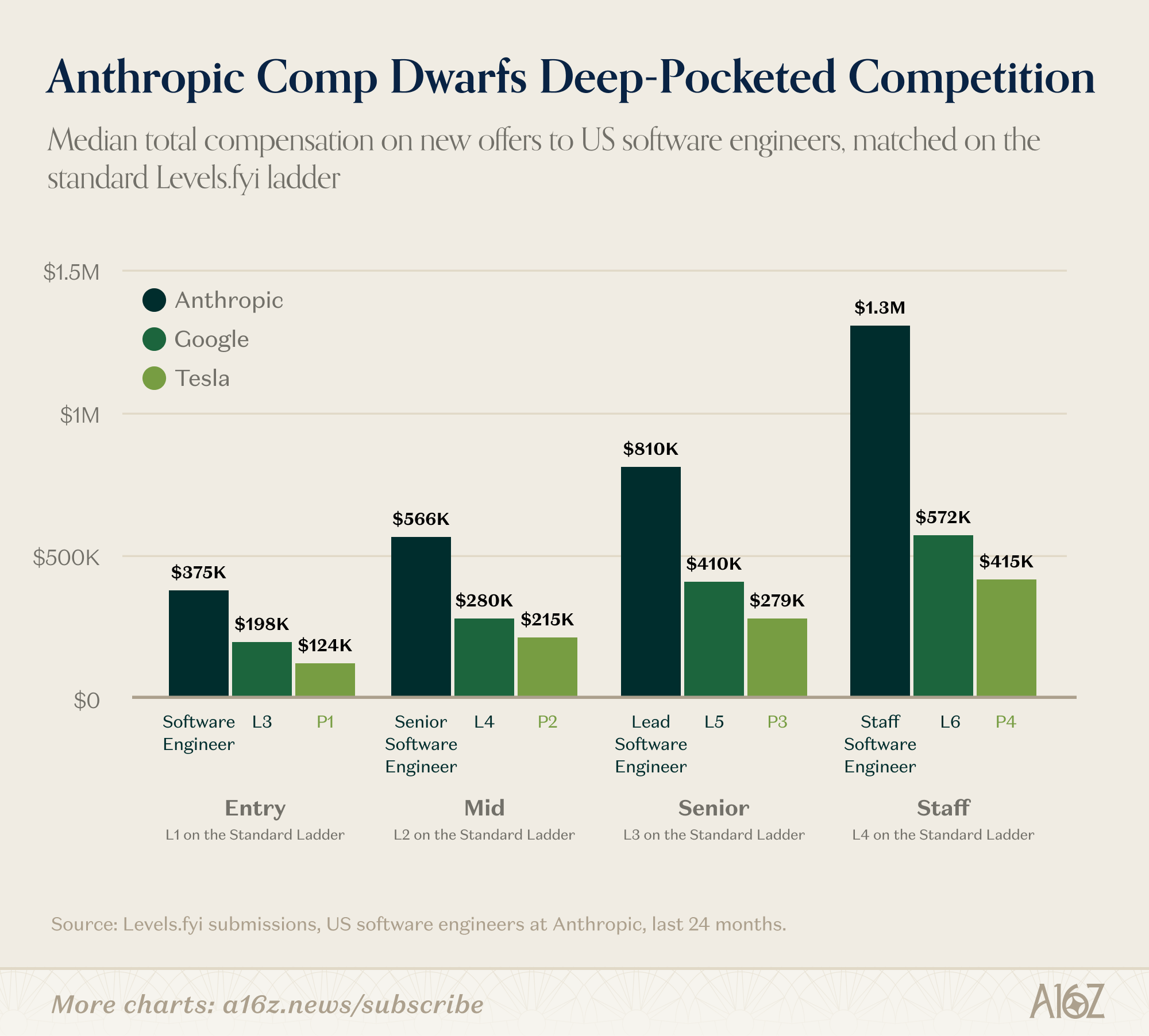
Taking the data at face value, Anthropic pays its engineers a lot, and it pays a lot more than comparably senior engineers at companies like Google and Tesla.
It’s good to be a member of technical staff, I suppose.
Elsewhere, this was also fun. According to data from Live Data Technologies, surfaced by Truist Securities, there’s a lot of overlap between where the labs hire from, but also not:
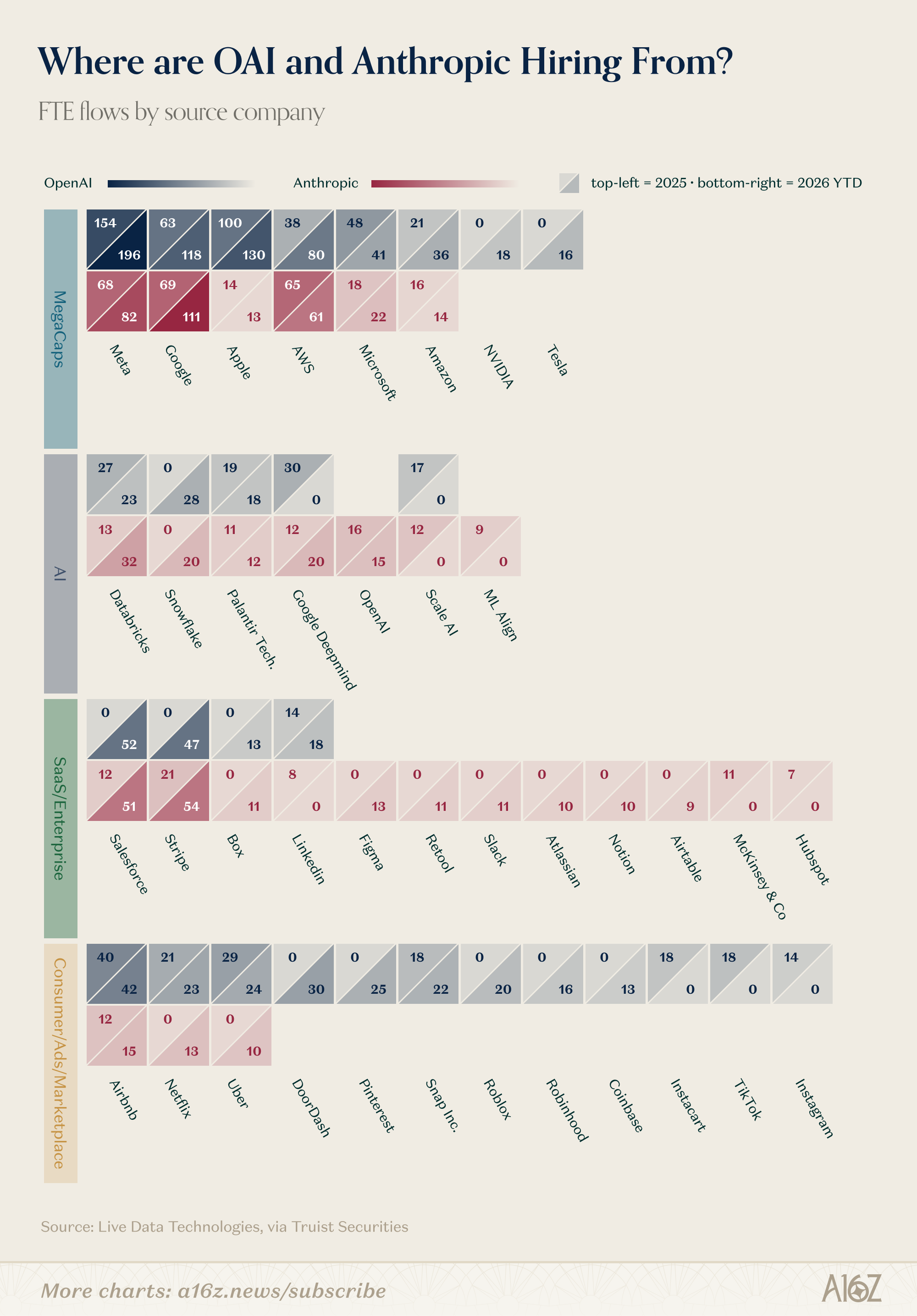
Both companies do a fair amount of hiring from the megacaps, although only OAI hired from Nvidia and Tesla (and only in 2026).
Likewise, Databricks, Snowflake (recently), Palantir and DeepMind are common sources for talent.
Both labs also hired a substantial number of people from Salesforce and Stripe, as well.
But there the overlap appears to end—Anthropic did a fair amount of hiring from saas companies (while OAI did none), and OAI did a fair amount of hiring from consumer, marketplace, and ad-tech companies (while Anthropic did relatively little, outside of Airbnb, Netflix, and Uber).
Interpret that however you see fit.



This newsletter is provided for informational purposes only, and should not be relied upon as legal, business, investment, or tax advice. Furthermore, this content is not investment advice, nor is it intended for use by any investors or prospective investors in any a16z funds. This newsletter may link to other websites or contain other information obtained from third-party sources - a16z has not independently verified nor makes any representations about the current or enduring accuracy of such information. If this content includes third-party advertisements, a16z has not reviewed such advertisements and does not endorse any advertising content or related companies contained therein. Any investments or portfolio companies mentioned, referred to, or described are not representative of all investments in vehicles managed by a16z; visit https://a16z.com/investment-list/ for a full list of investments. Other important information can be found at a16z.com/disclosures. You’re receiving this newsletter since you opted in earlier; if you would like to opt out of future newsletters you may unsubscribe immediately.
That trio of graphs using Ramp data is horrendously bad lol. Do better on your DataViz!
Remind me what became of WorldCom?
(https://en.wikipedia.org/wiki/WorldCom_scandal)
If you like the revenue growth of the Neoclouds, you will LOVE the growth in their liabilities and financial obligations (debt & leases).
Latest quarter growth
Company Sales Total liability Financial obligs
Coreweave +113% +221%. +254%
Nebius. +454%. +1234%. +754%
Iren. +$34m +716% ($4bn). + 1123%
Get stuck in lads